Invisible Consumption: The Standby Power Drain Quietly Undermining America's Clean Energy Goals
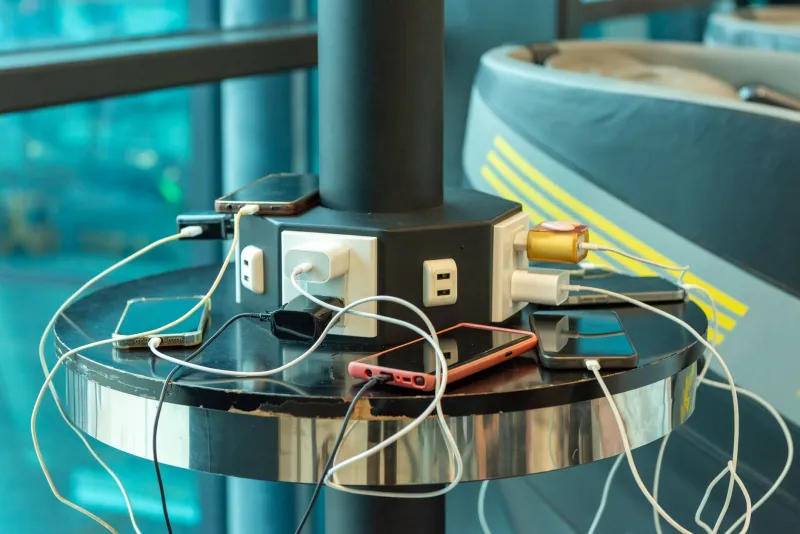
Walk through any American home after midnight. The television is dark. The microwave door is closed. The laptop sits folded on the kitchen counter. To all appearances, the house is at rest. Yet somewhere behind the walls, through a web of circuits and outlets, electricity continues to flow — silently, invisibly, and at considerable cost.
This phenomenon, known variously as standby power, idle load, or phantom load, represents one of the most underappreciated inefficiency crises in the American energy landscape. According to the Lawrence Berkeley National Laboratory, standby power accounts for approximately 8 to 10 percent of residential electricity consumption in the United States — a figure that translates to roughly $19 billion in wasted spending annually. For a nation committed to accelerating its clean energy transition, that number is not merely an inconvenience. It is an obstacle.
What Exactly Is a Phantom Load?
Phantom loads arise whenever a device continues drawing electrical current even when it is not performing its primary function. The causes are varied. Some appliances maintain internal clocks or memory functions. Others remain in a perpetual state of readiness, waiting for a remote control signal or a scheduled update. Still others are simply poorly designed, with no meaningful distinction between their "on" and "off" states.
The list of common culprits is longer than most consumers expect. Cable and satellite set-top boxes are among the worst offenders, often consuming nearly as much power in standby mode as when actively streaming content. Game consoles, particularly older models, can draw 70 to 150 watts simply by remaining plugged in and connected to the internet. Inkjet printers, desktop computers left in sleep mode, smart home hubs, and even certain LED televisions all contribute meaningfully to a household's baseline electricity demand.
Commercial and industrial settings compound the problem dramatically. Office buildings filled with idle monitors, server rooms running equipment at partial capacity, and retail spaces maintaining always-on display units collectively dwarf residential phantom consumption in absolute terms. The Electric Power Research Institute estimates that standby losses across the U.S. commercial sector may exceed 100 billion kilowatt-hours per year.
The Grid Implications Nobody Is Talking About
The conversation around phantom loads rarely extends beyond personal finance, and that is a significant oversight. From a grid management perspective, idle consumption creates a persistent baseline demand that renewable energy sources must satisfy even during periods of low or variable output. Solar generation, for instance, drops to zero after sundown. Wind output fluctuates with atmospheric conditions. When the demand floor is artificially elevated by millions of standby devices, grid operators must rely more heavily on dispatchable fossil fuel generation to fill the gap.
This dynamic is particularly consequential as the United States works to integrate larger shares of intermittent renewables into its electricity mix. Every unnecessary watt of baseline demand is a watt that storage systems must cover, a watt that strains transmission infrastructure, and a watt that delays the retirement of aging natural gas peaker plants. Efficiency, in this context, is not simply about saving money — it is about making space on the grid for the clean energy sources we are working so hard to build.
Furthermore, phantom loads distort the economic case for rooftop solar and home battery systems. A household whose baseline consumption is inflated by a dozen standby devices will require a larger, more expensive solar installation to achieve meaningful offset. Reducing idle consumption before sizing a solar array is one of the most cost-effective steps any homeowner can take, yet it receives a fraction of the attention lavished on panel efficiency ratings or inverter technology.
Identifying the Worst Offenders in Your Home
Not all phantom loads are created equal. A phone charger left plugged in without a device attached draws only a fraction of a watt — a negligible amount in isolation, though not insignificant when multiplied across 130 million American households. The devices that genuinely merit attention are those consuming five watts or more in standby mode.
Among the highest-priority targets:
- Set-top boxes and DVRs: Many draw 15 to 30 watts continuously, even while recording nothing.
- Gaming consoles: Connected standby modes on systems like the PlayStation and Xbox can consume 70 watts or more per hour.
- Older desktop computers and monitors: Systems left in "sleep" rather than fully powered off may draw 20 to 40 watts.
- Combination microwave-convection ovens: The digital display and clock function alone can account for 3 to 5 watts around the clock.
- Garage door openers: Surprisingly, these draw a continuous 5 to 10 watts to maintain their radio frequency receivers.
A simple watt meter, available at most hardware stores for under $30, allows any consumer to audit their home's phantom consumption with precision. The findings are frequently revelatory.
What Policy Can — and Must — Do
Individual action, while meaningful, cannot resolve a problem of this scale on its own. Regulatory standards have a central role to play, and the United States has historically been inconsistent in applying them.
The Department of Energy maintains appliance efficiency standards that include standby power limits for certain product categories, but enforcement gaps and outdated benchmarks have allowed inefficient devices to remain on the market. The European Union's Ecodesign Regulation, by contrast, caps standby consumption at 0.5 watts for most consumer electronics — a standard that has driven measurable improvements across the product landscape.
Advocates at the Sustainable Energy Coalition and allied organizations have long called for the U.S. to adopt comparable mandatory limits, updated regularly to reflect technological capabilities. Voluntary programs such as ENERGY STAR have achieved genuine progress, but voluntary participation leaves substantial portions of the market untouched.
Utility-side interventions also offer promise. Time-of-use rate structures that charge higher prices during peak demand hours create financial incentives for consumers to reduce all forms of unnecessary consumption, including standby loads. Some utilities have begun offering rebates for smart power strips and advanced outlet timers — tools that automate the process of cutting power to idle devices without requiring behavioral changes from busy households.
The Path Forward
Addressing phantom consumption is not glamorous work. It does not generate the headlines that accompany a new offshore wind farm or a grid-scale battery installation. But the mathematics are compelling: eliminating standby waste across American homes and businesses would free up enough electricity to power tens of millions of additional households — electricity that could instead come from solar panels and wind turbines rather than fossil fuel generators.
For communities working to reduce their collective carbon footprint, phantom load reduction represents one of the fastest, cheapest, and most equitable interventions available. No capital investment is required to unplug a device. No permitting process is needed to purchase a smart power strip. And no household — regardless of income level or geography — is exempt from the opportunity to reclaim wasted watts.
The clean energy transition will ultimately be won or lost on the combined effect of thousands of decisions, large and small. Eliminating the invisible drain of standby power is one decision that every American can make today.