Atlantic Winds Rising: The Coastal States Betting Their Energy Future on Offshore Power
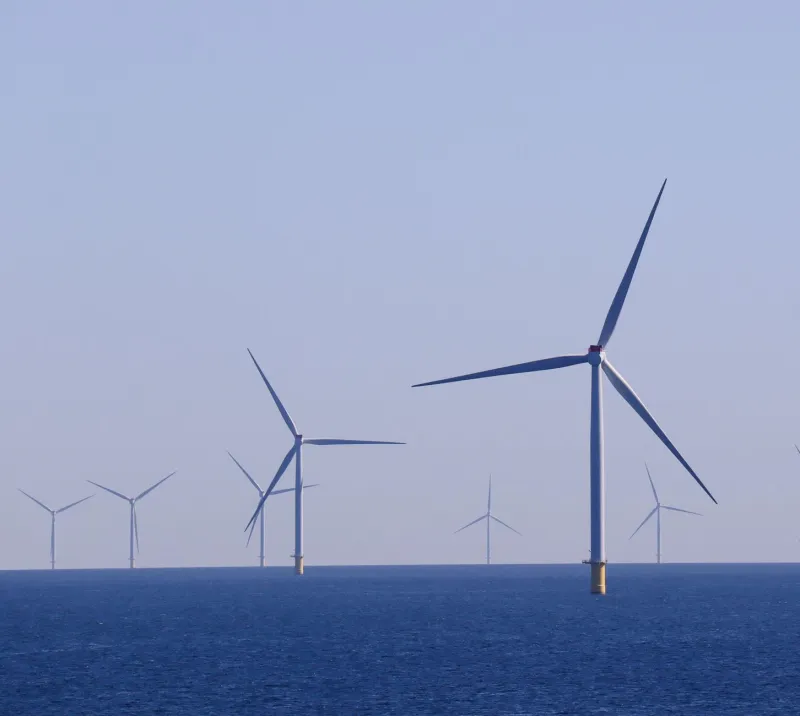
Stand on the shore at Cape Hatteras on a blustery February morning and you will feel, quite literally, the energy America has left on the table for decades. The Atlantic wind corridor — stretching from the rocky headlands of Maine down through the Carolinas and beyond — represents one of the most powerful, consistent, and accessible renewable energy resources anywhere in the world. Yet as of early 2025, the United States has installed only a fraction of the offshore wind capacity that European nations have operated for years.
That gap is narrowing. Slowly, contentiously, and with considerable financial turbulence, America's offshore wind industry is beginning to deliver on promises that have circulated in policy circles since the early 2000s. Whether the sector can achieve the scale necessary to meaningfully contribute to national decarbonization goals, however, remains an open and urgent question.
What the Atlantic Actually Offers
The continental shelf along the U.S. Atlantic coast is unusually well-suited for offshore wind development. Shallow water depths extending considerable distances from shore reduce the cost and complexity of fixed-bottom turbine foundations, the dominant technology currently deployed at commercial scale. Wind speeds in the region are strong and relatively stable, providing the kind of capacity factor — the ratio of actual to theoretical maximum output — that makes projects financially viable.
The National Renewable Energy Laboratory has estimated that the technical resource potential along the Atlantic Outer Continental Shelf exceeds 2,000 gigawatts. To put that figure in perspective, the entire current U.S. electricity generating capacity from all sources combined sits at roughly 1,200 gigawatts. The Atlantic corridor is not a marginal supplement to the national grid; it is, in potential, a primary engine.
Critically, this resource sits adjacent to some of the nation's most densely populated and energy-hungry metropolitan areas. New York, Boston, Philadelphia, and Washington, D.C., all lie within transmission range of viable lease areas. Offshore wind does not require building new long-distance transmission corridors through rural states — a challenge that bedevils solar and land-based wind development in the interior. The power can, in principle, flow relatively directly to the consumers who need it most.
Technology Closing the Gap
When the United States' first commercial offshore wind farm, the Block Island Wind Farm off Rhode Island, came online in 2016, its five turbines generated a combined 30 megawatts. Today's utility-scale projects deploy turbines capable of generating 12 to 15 megawatts apiece, with 20-megawatt machines in advanced development. This exponential growth in turbine capacity has fundamentally changed the economics of the industry.
Larger turbines mean fewer foundations per gigawatt of capacity, fewer installation vessel trips, and lower per-unit operation and maintenance costs. The dramatic size increases have contributed to cost reductions that, while partially reversed by recent supply chain disruptions and inflation, have made offshore wind broadly competitive with other forms of new electricity generation.
Floating offshore wind technology, still in early commercial deployment globally, opens an additional frontier. The deeper waters off the coasts of California, Oregon, and the Gulf of Maine — where fixed-bottom foundations are impractical — become accessible with floating platforms tethered to the seabed. While floating wind currently carries a significant cost premium, industry analysts expect that premium to compress substantially as the technology matures and supply chains develop.
The Economic Argument for Coastal Communities
Beyond megawatts and megadollars, offshore wind development carries profound implications for the coastal communities that host it. States including New York, New Jersey, Massachusetts, and Maryland have negotiated community benefit agreements and local content requirements into their offshore wind procurements, seeking to ensure that the economic activity generated by the industry flows into local economies rather than exclusively to distant corporate headquarters.
Port infrastructure investment has emerged as one of the most tangible near-term benefits. Offshore wind installation and operations require specialized staging facilities, and states have competed aggressively to attract those investments. New Jersey's State Street Port in Salem and New York's South Brooklyn Marine Terminal represent hundreds of millions of dollars in public and private capital directed at capturing supply chain activity. For communities that have watched their industrial and maritime economies erode over decades, these investments carry significance that transcends energy policy.
The workforce dimension is equally significant. Offshore wind installation and maintenance require skilled trades — electricians, ironworkers, marine technicians — that offer wages substantially above the regional median. Union representation in the sector has been a point of active negotiation between labor organizations and developers, with several major projects committing to project labor agreements.
Obstacles That Remain Real
The offshore wind industry's recent history also contains sobering lessons about the distance between promise and delivery. Between 2022 and 2024, several high-profile projects along the Atlantic coast were canceled or renegotiated as developers confronted a toxic combination of supply chain disruptions, rising interest rates, and fixed-price power purchase agreements signed when costs were projected to fall rather than rise.
Orsted, the Danish energy giant that pioneered much of the early U.S. offshore wind expansion, wrote down billions in project value and exited several state procurements. BP and Equinor renegotiated contracts in New York. The episode revealed a structural fragility in the procurement model dominant in the Northeast, where long-term fixed prices negotiated years in advance leave developers exposed to macroeconomic volatility.
States have responded by updating their procurement frameworks, offering inflation adjustment mechanisms and exploring alternative financing structures. The federal Inflation Reduction Act's production and investment tax credits have also improved project economics, though the political durability of those incentives has become a source of investor anxiety given the shifting policy environment in Washington.
Permitting timelines remain a persistent friction point. Federal environmental review processes, while legally necessary, can extend project development timelines by years, adding carrying costs and uncertainty that degrade investment returns. Coordination between the Bureau of Ocean Energy Management, the Army Corps of Engineers, and state regulatory bodies has improved but remains imperfect.
Fisheries conflicts have emerged as the most politically charged community-level obstacle. Commercial fishing interests, particularly in New England, have raised concerns about turbine placement affecting traditional fishing grounds and migration patterns for species including Atlantic surfclam and sea scallop. Some of these concerns reflect genuine ecological questions deserving rigorous scientific attention; others have been amplified by fossil fuel interests seeking to delay deployment. Distinguishing between the two requires the kind of transparent, independent research that should be a priority for federal agencies.
What Genuine Progress Looks Like
The Vineyard Wind project off Massachusetts, the nation's first utility-scale offshore wind installation, began delivering power to the New England grid in 2024. It is a modest beginning — 62 turbines, 806 megawatts of capacity — but it represents proof of concept at commercial scale in American waters, under American regulatory conditions, using a supply chain increasingly rooted in American ports and factories.
Several larger projects are in advanced stages of construction or permitting along the mid-Atlantic coast. If current timelines hold, the installed offshore wind capacity along the Atlantic seaboard could reach 30 gigawatts by the end of the decade, enough to power millions of homes and represent a genuine structural contribution to regional grid decarbonization.
That outcome is not guaranteed. It will require sustained policy commitment at the federal and state levels, continued technology cost reduction, honest resolution of legitimate siting conflicts, and financing frameworks resilient enough to withstand economic volatility. None of those conditions can be taken for granted.
But the wind is there. It has always been there. The question America is finally beginning to answer seriously is whether we have the institutional will to harvest it.