The Heat Beneath Our Feet and Above Our Rooftops: America's Underinvested Thermal Energy Revolution
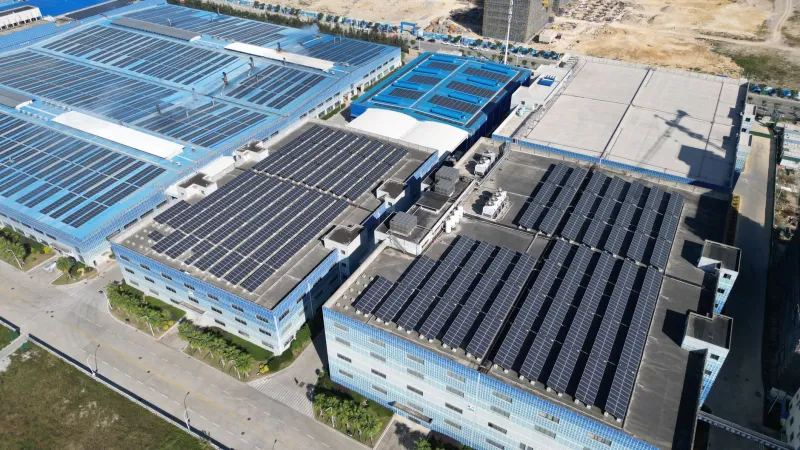
There is a persistent blind spot at the center of America's clean energy conversation. Walk into nearly any policy forum, read nearly any advocacy publication — including, at times, this one — and the discussion gravitates reliably toward the same set of technologies: solar photovoltaic panels, wind turbines, battery storage, and the transmission infrastructure connecting them. These are genuinely consequential technologies, and the progress they have achieved over the past decade is remarkable.
But electricity is not the whole story. Roughly 45 percent of total U.S. energy consumption is devoted not to generating electricity but to producing heat — warming the interior spaces where Americans live and work, heating water, and driving the high-temperature industrial processes that manufacture steel, cement, chemicals, glass, paper, and the dozens of other materials on which modern life depends. Most of that heat is currently produced by burning fossil fuels. And most of the policy attention directed at decarbonizing it is inadequate to the scale of the challenge.
Thermal energy technologies — concentrated solar power, solar thermal heating systems, industrial waste heat recovery, and geothermal heat pumps — offer pathways to address this neglected half of the emissions ledger. They are not theoretical. They are operating today, in American factories and communities, cutting costs and carbon simultaneously. They simply have not attracted the investment, the policy support, or the public profile that their potential warrants.
The Industrial Heat Problem Nobody Is Talking About
American industry consumes approximately 25 quadrillion BTUs of energy annually, the majority of it as process heat. Cement kilns operate at temperatures exceeding 2,700 degrees Fahrenheit. Glass furnaces require sustained heat above 2,900 degrees. Chemical plants depend on precise, continuous heat delivery across an enormous range of temperatures and configurations.
Electrifying these processes directly is possible for some applications and at some temperature ranges, but it is not a universal solution. High-temperature industrial heat is technically difficult and currently expensive to produce with electricity, and the transmission and distribution infrastructure required to deliver that electricity at industrial scale in many manufacturing locations does not exist and would require massive capital investment to build.
Concentrated solar power — CSP — offers a different approach for sun-rich regions. Rather than converting sunlight to electricity as photovoltaic panels do, CSP systems use mirrors or lenses to focus solar radiation onto a receiver, generating heat that can be stored in molten salt or other thermal media and delivered on demand. The technology is well-established at utility scale for power generation, with installations operating in California's Mojave Desert and in Arizona. Its application to direct industrial heat supply is less developed but is receiving growing attention from both researchers and manufacturers facing rising natural gas costs and carbon compliance obligations.
At the Sandia National Laboratories facility in Albuquerque, researchers have been developing high-temperature CSP systems capable of delivering heat at the temperatures required for the most demanding industrial applications. Pilot projects coupling CSP heat delivery to industrial processes have been conducted in the American Southwest, where solar resources are abundant and industrial activity is substantial. These are not demonstration curiosities; they represent a serious research and development pathway toward commercial deployment.
Waste Heat: The Resource Hidden in Plain Sight
Every industrial process that generates heat also loses heat. The laws of thermodynamics make some of that loss inevitable, but the proportion of industrial heat that escapes to the atmosphere through exhaust stacks, cooling towers, and uninsulated equipment without performing any useful work is, by any reasonable assessment, staggering.
The U.S. Department of Energy has estimated that American industry wastes approximately 20 to 50 percent of the energy it consumes as unrecovered heat. Capturing even a fraction of that waste stream and redirecting it to useful applications — preheating combustion air, generating steam for secondary processes, or providing space heating for adjacent facilities — represents an emissions reduction opportunity that requires no new fuel supply and often pays back capital investment within a few years.
In Middletown, Ohio, AK Steel's (now Cleveland-Cliffs') integrated steel mill has operated waste heat recovery systems that capture thermal energy from blast furnace operations to generate electricity and reduce facility heating loads. In the Pacific Northwest, several pulp and paper mills have implemented combined heat and power systems that recover waste heat from power generation to supply the process heat their manufacturing operations require, achieving overall energy efficiencies that would be impossible with separate heat and power production.
These examples are not anomalies. They are demonstrations of what becomes economically rational when energy costs are high and operational expertise is directed at thermal efficiency. The barrier to broader adoption is less technological than institutional: waste heat recovery projects are complex, require coordination across facility systems, and compete for capital with core production investments. Policy mechanisms that improve the financial case for these projects — accelerated depreciation, production incentives, or streamlined access to green financing — could unlock substantial emissions reductions at relatively modest public cost.
Solar Thermal: The Simpler Solution Overlooked in the Rush to PV
Solar photovoltaic technology has achieved cost reductions so dramatic that it has essentially displaced solar thermal as the default answer to questions about harnessing sunlight. That displacement is appropriate for electricity generation. For water and space heating, however, solar thermal collectors — which capture the sun's energy as heat rather than converting it to electricity — remain significantly more efficient on a per-square-foot basis and, in many applications, more cost-effective.
A solar thermal water heating system installed on a residential or commercial rooftop in a sunny climate can displace 50 to 80 percent of the natural gas or electricity that would otherwise heat water, with simple payback periods of five to ten years depending on local energy prices and installation costs. In states with high natural gas prices — California, the Northeast — the economics are particularly compelling.
Yet solar thermal installations in the United States have stagnated while PV has soared. The federal Investment Tax Credit, which has driven PV adoption, was for years structured in ways that disadvantaged solar thermal systems for residential applications. State incentive programs have similarly focused on electricity generation. The result has been a policy environment that has systematically underfunded a technology that could be delivering substantial emissions and cost reductions in the residential and commercial building sectors right now.
The Solar Energy Industries Association and the American Council for an Energy-Efficient Economy have both called for policy parity between solar thermal and PV in federal and state incentive structures. That call deserves broader support. Decarbonizing building heat — which accounts for roughly 13 percent of U.S. greenhouse gas emissions — requires deploying every available cost-effective tool, not only the tools that happen to generate electrons.
District Thermal Networks: The Community-Scale Opportunity
In several American cities, a different model for delivering thermal energy is gaining traction: community-scale district energy systems that distribute hot water or steam from central plants through insulated underground pipes to connected buildings. These systems, common in northern European cities and present in a number of U.S. university campuses and urban districts, offer efficiency advantages that individual building systems cannot match and create infrastructure that can be decarbonized progressively as low-carbon heat sources become available.
In Ithaca, New York, a citywide decarbonization initiative has centered in part on developing district geothermal networks that would use ground-source heat pumps connected to shared ground loops to provide heating and cooling across entire neighborhoods. The approach leverages the thermal stability of the earth — which maintains a relatively constant temperature at depth regardless of surface weather — to deliver highly efficient heating and cooling without combustion.
The Ithaca project is ambitious, and its implementation has required navigating significant financial and logistical complexity. But it illustrates a principle that applies broadly: thermal energy decarbonization is, in many contexts, a community-scale challenge that benefits from community-scale solutions. Individual building retrofits are valuable, but they leave the infrastructure benefits of shared systems unrealized.
For a country serious about meeting its climate commitments, the electricity-centric framing of the clean energy transition is a luxury we can no longer afford. Heat matters. Thermal solutions are ready. The policy attention and investment capital to deploy them at scale are long overdue.