Still Water, Wasted Watts: Why America's Aging Dams Are Failing the Clean Energy Future
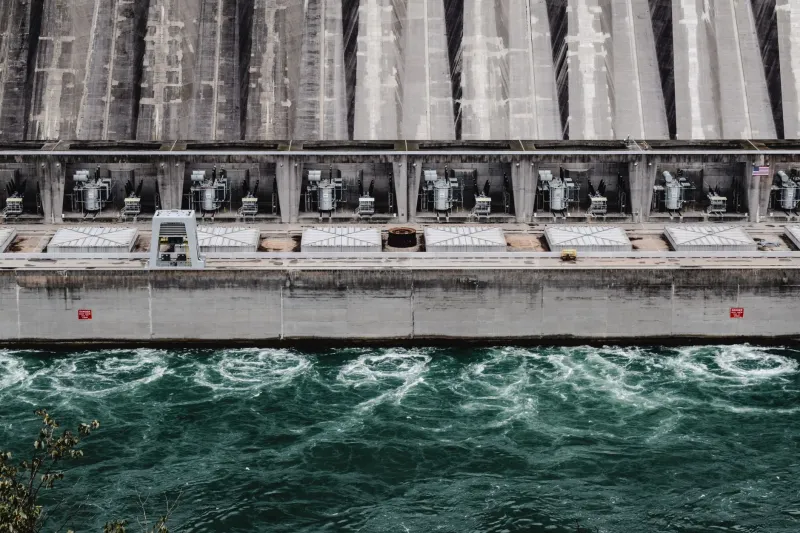
America's relationship with its dams is complicated. For more than a century, these structures have controlled floods, irrigated farmland, supplied drinking water, and generated electricity. Today, however, many of the nation's roughly 90,000 dams are approaching the end of their engineered lifespans, and only a fraction — approximately 3 percent — are equipped to generate any electricity at all. At a moment when the United States urgently needs to expand its clean energy portfolio, this aging water infrastructure represents both a significant obstacle and an extraordinary, underutilized opportunity.
A Vast Resource Hiding in Plain Sight
The U.S. Department of Energy has estimated that upgrading non-powered dams and optimizing existing hydroelectric facilities could add more than 50 gigawatts of clean capacity to the national grid — roughly equivalent to the output of fifty large nuclear power plants. Pumped-storage hydroelectricity, which functions as a massive rechargeable battery by moving water between reservoirs at different elevations, could add tens of gigawatts more in critical long-duration energy storage.
Yet despite this potential, hydroelectric development has stalled. The United States added only modest new hydro capacity over the past two decades, even as solar and wind installations surged. The reasons are not technological. Engineers understand how to upgrade turbines, modernize control systems, and retrofit irrigation canals with small-scale generators. The barriers, rather, are institutional — rooted in regulatory structures designed for a different era, chronic underinvestment in water infrastructure, and jurisdictional disputes that can leave a single project entangled for a decade or more.
The Regulatory Labyrinth
Hydroelectric projects in the United States are licensed by the Federal Energy Regulatory Commission (FERC), a process that, even for relatively modest upgrades to existing facilities, can take anywhere from five to fifteen years. Environmental review requirements — themselves vital protections for fish passage, water quality, and downstream ecosystems — have in some cases become so procedurally burdensome that project sponsors abandon viable proposals before they reach a final decision.
The challenge is compounded by overlapping federal and state jurisdictions. A single dam may fall under the purview of the Army Corps of Engineers, the Bureau of Reclamation, the Environmental Protection Agency, and multiple state water boards simultaneously. Coordination among these agencies is inconsistent at best. Smaller utilities and municipal water authorities, which manage a large share of non-powered dams, rarely have the legal and engineering staff to navigate this complexity without significant outside support.
"We've had projects where the permitting costs alone exceeded the projected construction budget," said one representative of a Western irrigation district that spent years attempting to add hydroelectric generation to an existing reservoir — a project ultimately shelved due to regulatory attrition rather than technical infeasibility.
Deferred Maintenance and the Financing Gap
Beyond regulation, the physical condition of America's water infrastructure poses its own set of challenges. The American Society of Civil Engineers gave the nation's dams a D grade in its most recent infrastructure report card, noting that the average U.S. dam is now over 60 years old. Many structures require substantial rehabilitation before they could safely support modernized generating equipment, and that rehabilitation carries price tags that strain the budgets of the rural water districts and small municipalities that own a disproportionate share of them.
Federal financing mechanisms have not kept pace with this need. While the Bipartisan Infrastructure Law enacted in 2021 directed billions toward water infrastructure broadly, the portion allocated specifically to hydroelectric modernization and pumped-storage development has been modest relative to the scale of the opportunity. Loan programs administered by the Department of Energy have helped some larger utilities move forward, but smaller, community-owned facilities frequently fall below the threshold of projects those programs are designed to serve.
This financing gap has a geographic dimension worth noting. Many of the communities with the greatest concentration of non-powered dams are in rural Appalachia, the rural West, and the Pacific Northwest — regions that have historically depended on natural resource industries and are now navigating difficult economic transitions. For these communities, unlocking the clean energy value of existing water infrastructure could provide both local power generation and long-term economic development. The current financing structure, however, often leaves them without a viable path forward.
Pumped Storage: The Grid's Missing Battery
Perhaps nowhere is the gap between potential and reality more acute than in pumped-storage hydroelectricity. As the nation integrates ever-larger quantities of variable solar and wind power, the grid's need for long-duration storage — the ability to bank energy for hours or days rather than minutes — has become increasingly urgent. Pumped storage remains the most proven and cost-effective technology for meeting that need at scale, yet the United States has brought almost no new pumped-storage capacity online in over two decades.
Several large pumped-storage proposals are currently navigating the FERC licensing process, including projects in California, Wyoming, and Nevada that would repurpose existing reservoir pairs or mine pits as storage reservoirs. Developers report timelines stretching well beyond a decade from initial application to potential operation. Meanwhile, the grid's storage deficit grows.
Policymakers and advocates have proposed several reforms that could accelerate progress. These include establishing a dedicated permitting pathway for projects that repurpose already-disturbed land and water infrastructure, creating a federal co-investment program specifically targeting community-owned and municipally operated facilities, and funding technical assistance programs to help small water authorities assess their hydroelectric potential and navigate regulatory requirements.
Communities Leading the Way
Despite systemic obstacles, a number of communities and utilities are demonstrating what is possible. In rural Oregon, a small irrigation district recently completed a decade-long effort to add hydroelectric generation to an existing canal system, now supplying clean power to thousands of homes. In Colorado, a municipal water authority partnered with a regional cooperative to install run-of-river turbines at an existing water supply diversion, generating revenue that offsets ratepayer costs. In Tennessee, a community-owned utility is working with the Tennessee Valley Authority to evaluate pumped-storage potential at legacy reservoir sites.
These projects share a common thread: they required extraordinary persistence by local champions willing to absorb years of regulatory and financial uncertainty. That persistence should not be a prerequisite for clean energy development. Systemic reform — not just individual heroism — is what the scale of the climate challenge demands.
Rethinking Water Infrastructure as Energy Infrastructure
The United States built its water infrastructure over generations, with enormous public investment and at considerable ecological cost. The least the nation can do now is extract the maximum clean energy value from what already exists, rather than leaving it to deteriorate while pursuing new development on undisturbed land.
Modernizing hydroelectric facilities, equipping non-powered dams with generating capacity, and advancing pumped-storage development are not silver-bullet solutions to the energy transition. But they are durable, dispatchable, and deeply complementary to the solar and wind resources that will form the backbone of a clean grid. Unlocking them requires not a technological breakthrough, but a policy commitment — to streamlining regulatory pathways, financing community-scale projects, and finally treating water infrastructure as the clean energy asset it has always had the potential to be.