Buried in Red Tape: How America's Permitting Maze Is Stalling the Clean Energy Transition
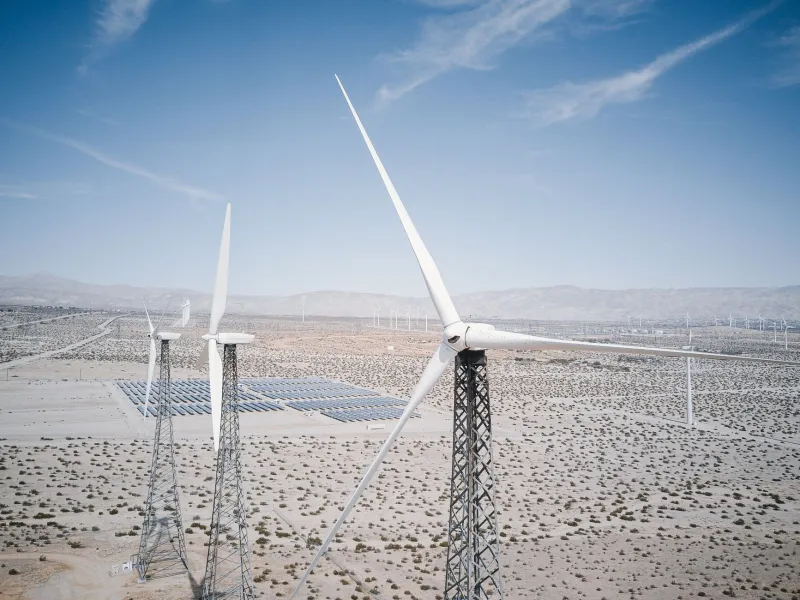
The United States possesses the wind, solar, and land resources to power a clean energy future many times over — yet a labyrinthine web of overlapping federal, state, and local permitting requirements is keeping that future perpetually out of reach. Developers report that securing approvals for a utility-scale wind or solar project can consume a decade or more, long after the turbines and panels themselves could have been manufactured and installed. Understanding why this bottleneck exists — and how to dismantle it without sacrificing environmental integrity — has become one of the most urgent policy challenges of the climate era.
A System Built for a Different Era
America's permitting architecture was not designed with a clean energy transition in mind. The foundational statutes governing project approvals — the National Environmental Policy Act (NEPA), the Endangered Species Act, the Clean Water Act, and dozens of parallel state-level equivalents — were enacted decades before utility-scale renewables were a commercial reality. Each law reflects genuinely important environmental values. Together, however, they create a sequential gauntlet of reviews, comment periods, interagency consultations, and litigation windows that can stretch approvals far beyond any reasonable timeline.
Federal lands alone illustrate the complexity. A wind farm proposed on Bureau of Land Management territory must navigate BLM's own environmental review, coordinate with the U.S. Fish and Wildlife Service on avian impact assessments, consult with the Army Corps of Engineers if any waterway is implicated, and satisfy the requirements of multiple state agencies — all before a single foundation is poured. Each agency operates on its own calendar, with its own data requirements and internal review procedures, and none is legally obligated to synchronize with the others.
Case Studies in Delay
The Chokecherry and Sierra Madre Wind Energy Project in Carbon County, Wyoming, offers a sobering illustration. First proposed in 2008, the project — which would be among the largest wind farms in the nation — did not receive its final federal Record of Decision until 2012, and subsequent litigation and transmission challenges pushed construction timelines even further. More than fifteen years after conception, the project remains only partially realized, despite sitting atop some of the most productive wind resources on the continent.
In the desert Southwest, large-scale solar developers have encountered similar friction. A proposed photovoltaic facility in California's Mojave Desert spent nearly seven years in environmental review, during which time the cost of solar panels fell by more than eighty percent — rendering the original financial models obsolete and forcing a complete project restructuring. The irony was not lost on observers: the very technology that could displace fossil fuels was being outpaced by the bureaucratic process meant to protect the environment from those same fuels.
Smaller community-scale projects are not immune. Municipal solar arrays and cooperative wind installations in rural Midwestern counties have reported permit timelines of three to five years for projects that, in terms of physical construction, require only a few months of work. For community energy organizations operating on limited budgets, carrying costs during prolonged review periods can render otherwise viable projects economically unworkable.
The Voices in the Room
Developers who work across multiple jurisdictions describe a system that is not merely slow but structurally unpredictable. "You can do everything right — hire the best environmental consultants, engage the community early, choose a site with minimal ecological sensitivity — and still have no reliable estimate of when, or whether, you'll get to construction," said one renewable energy project manager with experience across six western states, who requested anonymity to speak candidly about ongoing regulatory relationships.
Regulators, for their part, frequently point to inadequate staffing and funding as root causes. State energy offices and federal land management bureaus have seen their workloads multiply as the renewable pipeline has grown, while their budgets have not kept pace. "We want to move these projects forward," a senior BLM official noted at a recent public forum on permitting reform. "But we're being asked to process ten times the applications with roughly the same staff we had a decade ago. The math simply doesn't work."
Environmental advocates occupy a more nuanced position. Many organizations that ardently support renewable energy deployment have simultaneously been parties to litigation challenging specific project approvals — not out of opposition to clean energy, but because individual projects have at times been sited in critical wildlife corridors or sensitive desert ecosystems. The tension between the urgency of decarbonization and the imperative to protect intact natural landscapes is real, and any permitting reform that dismisses it will ultimately prove counterproductive.
What Reform Could Look Like
A growing coalition of energy researchers, legal scholars, and policy advocates has coalesced around a set of reforms that they argue could dramatically reduce permitting timelines without gutting substantive environmental review.
Coordinated interagency review stands out as perhaps the single highest-impact intervention. Rather than sequential agency consultations — in which one agency's review cannot begin until another's concludes — a parallel review model would allow all relevant federal and state bodies to conduct their assessments simultaneously, sharing data and communicating in real time. The Biden administration's efforts to establish a Federal Permitting Improvement Steering Council represented a step in this direction, though implementation has been uneven.
Pre-designation of priority zones offers another powerful tool. By identifying, in advance, the federal and state lands most suitable for renewable development — areas with high resource potential, low ecological sensitivity, and existing transmission access — regulators could create streamlined review pathways for projects within those zones. Developers would know upfront that a project in a priority zone faces a defined, time-limited review rather than an open-ended process.
Categorical exclusions for low-impact projects could remove smaller installations — rooftop solar arrays, community wind turbines, battery storage facilities at existing industrial sites — from the full NEPA review process entirely, reserving intensive scrutiny for large, complex, or ecologically sensitive proposals.
Increased agency capacity is a prerequisite for any of the above. Permitting reform that does not include meaningful investment in the staffing and technical resources of reviewing agencies will simply transfer the bottleneck rather than eliminate it.
Early and genuine community engagement deserves emphasis as well. Projects that fail to build trust with local communities frequently encounter organized opposition that triggers additional review cycles, appeals, and litigation. Investing in robust, early-stage community consultation — including meaningful outreach to tribal nations whose lands and cultural resources may be implicated — reduces conflict downstream and produces better project outcomes.
The Cost of Inaction
The stakes of permitting paralysis extend well beyond the frustration of individual developers. The United States has committed, under the Paris Agreement and through domestic legislation, to deep reductions in greenhouse gas emissions within a timeframe that demands rapid deployment of clean energy infrastructure. The Lawrence Berkeley National Laboratory estimates that the domestic renewable energy pipeline currently holds more than two terawatts of proposed capacity — enough to transform the American electricity sector — yet the vast majority of those projects are stalled in interconnection queues and permitting processes, not in manufacturing or construction.
Every year of delay is a year of continued fossil fuel combustion, continued carbon accumulation in the atmosphere, and continued health impacts on the communities — disproportionately low-income and communities of color — that bear the greatest burden of air pollution from power generation.
The permitting system was built to protect the environment. Reforming it, urgently and thoughtfully, is now itself an act of environmental protection.