Green Collar Rising: How Renewable Energy Is Reshaping the American Workforce
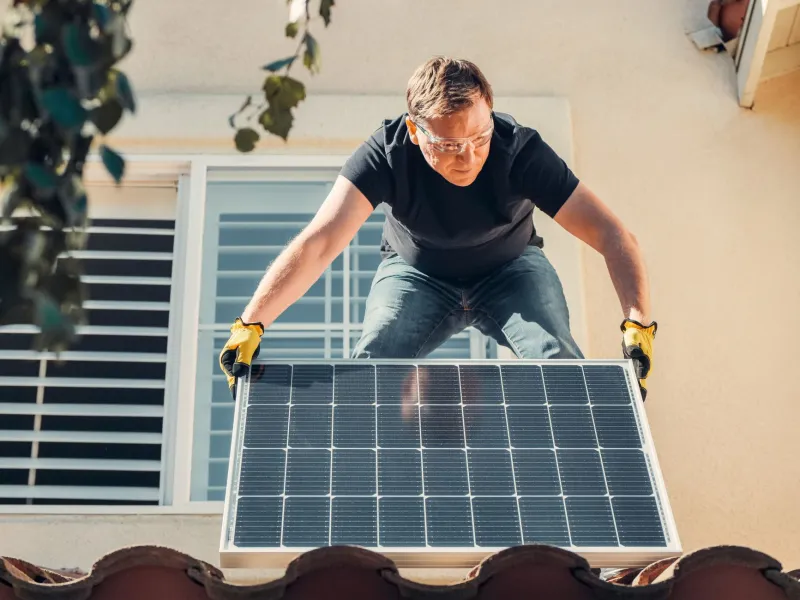
For decades, the debate over clean energy policy was framed almost exclusively around environmental outcomes — carbon parts per million, sea level projections, and parts-per-billion methane concentrations. What that framing consistently obscured was a quieter, more immediate transformation happening at the level of individual livelihoods: the emergence of a clean energy labor market that is not merely growing, but accelerating past the traditional fossil fuel sector at a pace few analysts anticipated.
According to the U.S. Department of Energy's annual Energy and Employment Report, clean energy jobs now account for more than 40 percent of all energy sector employment in the United States — a figure that has climbed steadily even through periods of economic turbulence. Wind turbine service technicians and solar photovoltaic installers continue to rank among the Bureau of Labor Statistics' fastest-growing occupations, with projected ten-year growth rates exceeding 60 percent. The numbers are striking. The implications are even more so.
Wages, Benefits, and the Middle-Class Promise
Skeptics of the clean energy transition have long argued that new green jobs cannot replicate the wage floors and benefit packages that unionized fossil fuel employment historically provided. That argument is becoming harder to sustain. A comprehensive 2023 analysis by the BlueGreen Alliance found that the median hourly wage for clean energy installation and manufacturing roles now sits above $25 per hour — comparable to, and in some regional markets exceeding, wages in coal and natural gas extraction.
The passage of the Inflation Reduction Act in 2022 has amplified this trend. The law's prevailing wage and apprenticeship requirements, attached to billions of dollars in clean energy tax credits, created a structural incentive for project developers to hire workers at union-scale compensation. Early data from projects qualifying under these provisions suggest that the wage floor is holding — and in some cases climbing.
Maria Gutierrez, a 34-year-old former hotel housekeeper in El Paso, Texas, enrolled in a solar installation training program through a local workforce development nonprofit in 2021. Within eighteen months, she had completed her certification and accepted a full-time position with a regional solar contractor at $28 per hour, with employer-sponsored health insurance. "I never thought I would be doing something that felt this important," she said. "And the pay is better than anything I had before."
Her experience is representative of a broader pattern. Community colleges and technical institutes across the country are reporting surging enrollment in energy technology programs, driven by a combination of job placement rates, employer partnerships, and the tangible appeal of working in an industry with a growth trajectory.
Regional Hotspots and the Geography of Opportunity
Clean energy job creation is not distributed evenly across the American map, and understanding its geography is essential for policymakers and workforce developers alike. Several distinct regional clusters have emerged as epicenters of employment growth.
The Southeast, long resistant to renewable energy policy at the state level, has paradoxically become one of the most active zones for clean energy manufacturing investment. Georgia alone has attracted more than $20 billion in battery and electric vehicle manufacturing commitments since 2021, anchored by facilities from Hyundai, Rivian, and multiple battery cell suppliers. The "Battery Belt" stretching from Georgia through Tennessee, Kentucky, and Ohio now represents one of the most significant industrial workforce expansions the region has seen in generations.
In the Mountain West, wind and solar development is creating sustained demand for construction trades, electrical workers, and operations and maintenance technicians. Wyoming, despite its deep historical ties to coal and natural gas, has seen meaningful growth in renewable energy employment as project developers move into the state's high-wind corridors. Colorado's Front Range has developed a robust ecosystem of clean energy firms, drawing engineering and software talent alongside traditional trades.
The Upper Midwest presents perhaps the most instructive case study in workforce transition. States like Michigan, Indiana, and Wisconsin — home to legacy auto manufacturing communities — are navigating a simultaneous contraction in internal combustion engine production and an expansion in electric vehicle component manufacturing. The transition is not seamless, and workforce development organizations are candid about the displacement risks for workers whose skills do not transfer directly. But the net employment trajectory in these states is trending positive.
Training Pathways: Closing the Skills Gap Before It Widens
The clean energy sector's most pressing near-term challenge is not demand for labor — it is supply. Employers across solar, wind, battery storage, and grid modernization consistently identify workforce availability as a primary constraint on project timelines. A 2024 report from the National Renewable Energy Laboratory projected that the United States will need to train and deploy more than 900,000 additional clean energy workers by 2030 to meet current federal deployment targets.
Addressing that gap requires a layered approach. Registered apprenticeship programs, which combine paid on-the-job training with classroom instruction, have expanded significantly in the electrical and construction trades that underpin clean energy installation. The International Brotherhood of Electrical Workers, whose members wire solar arrays and connect wind farms to the grid, has seen apprenticeship applications rise substantially as clean energy project volume has grown.
Community colleges occupy a critical middle tier in the training ecosystem. Institutions like Ivy Tech Community College in Indiana, Lone Star College in Texas, and Wake Technical Community College in North Carolina have developed industry-aligned programs in solar technology, battery systems, and energy efficiency that can be completed in under two years. Employer advisory boards help ensure that curricula remain current as technology evolves.
For workers transitioning from fossil fuel sectors, specialized programs have emerged to bridge the gap. The IBEW's Powering America initiative and the Solar Energy Industries Association's NABCEP certification pathway both offer accelerated routes for experienced tradespeople to qualify for clean energy roles. James Whitfield, a 48-year-old former coal plant operator in southwestern Virginia, completed a grid modernization training program through a regional workforce consortium and now works as a substation technician for a utility undergoing a major renewable integration project. "The technology is different, but the discipline is the same," he said. "You're still responsible for keeping the lights on."
The Five-Year Talent Crunch: Where Shortages Will Bite Hardest
Looking ahead to 2030, labor economists and industry analysts identify several subsectors where talent shortages are likely to be most acute. Grid modernization — encompassing transmission upgrades, smart grid technology deployment, and interconnection engineering — tops most lists. The backlog of renewable energy projects awaiting grid connection has grown to historic proportions, and resolving it requires not only regulatory reform but a substantial expansion of the engineering and construction workforce capable of executing transmission builds.
Battery storage systems represent a second pressure point. As utility-scale storage deployments accelerate and residential battery adoption grows, demand for technicians trained in battery management systems, electrical safety protocols, and software integration is outpacing the current training pipeline. Cybersecurity expertise applied to energy infrastructure — a field that barely existed a decade ago — is another area where the gap between available talent and employer demand is widening rapidly.
The workforce transformation underway in American energy is neither automatic nor guaranteed to be equitable. It requires deliberate investment in training infrastructure, intentional outreach to communities historically excluded from well-paying industrial employment, and policy frameworks that sustain wage standards as the sector scales. But the foundational reality is now difficult to dispute: clean energy is not a future jobs story. It is a present one — and the communities and institutions that recognize this earliest will be best positioned to benefit from it.