Charged but Not Ready: The Energy Storage Gap Threatening America's Clean Power Future
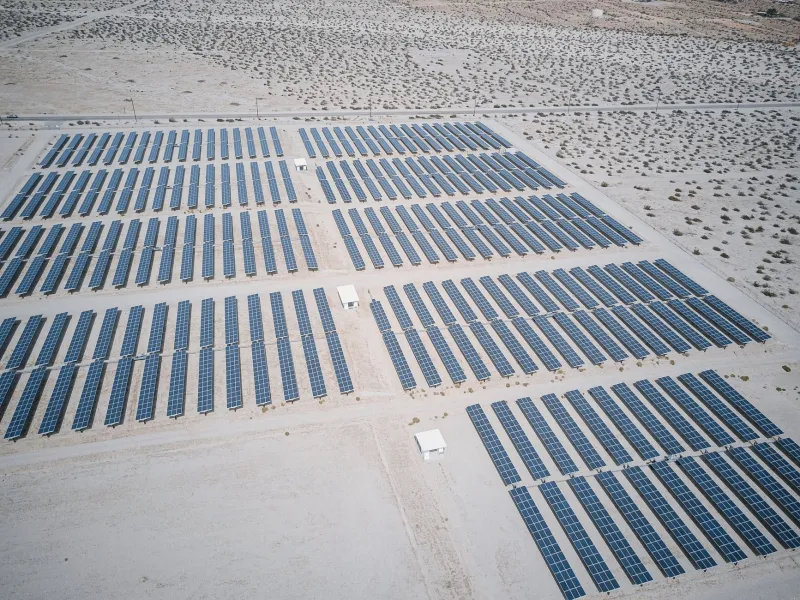
America's renewable energy sector has achieved something genuinely remarkable over the past decade. Solar panel costs have fallen by more than 90 percent since 2010. Wind power now supplies roughly ten percent of the nation's electricity. Clean energy investment hit record levels in 2023, buoyed in part by the Inflation Reduction Act's sweeping incentives. And yet, grid operators from California to Texas continue to face moments of precarious instability — not because the sun stopped shining or the wind stopped blowing, but because the energy those sources generate cannot be reliably stored and dispatched when demand peaks.
The inconvenient truth at the center of America's energy transition is this: without a dramatic expansion of energy storage infrastructure, the renewable revolution risks stalling on its own success.
The Intermittency Problem Is Not Going Away
Solar and wind power are, by their nature, variable. The sun generates maximum output at midday; residential and commercial demand typically peaks in early evening. Wind patterns shift seasonally and regionally. These mismatches between supply and demand are manageable at low penetration rates, but as renewables claim a larger share of the generation mix, the grid's need for flexible, dispatchable storage becomes exponential rather than linear.
California offers the starkest illustration. The state now regularly generates more solar electricity than it can consume during daylight hours, forcing grid operators to curtail — that is, simply waste — enormous quantities of clean power. In 2023, California curtailed over two million megawatt-hours of renewable energy, enough to power hundreds of thousands of homes for an entire year. Meanwhile, the state still relies on natural gas peaker plants to meet evening demand. The solution to both problems is the same: utility-scale battery storage capable of absorbing surplus midday generation and releasing it when it is most needed.
Manufacturing Capacity: A Supply Chain Built on Fragile Ground
The technological pathway to large-scale battery storage is relatively well understood. Lithium-ion technology, the same chemistry powering electric vehicles and consumer electronics, dominates the utility-scale storage market. Longer-duration alternatives — including iron-air batteries, flow batteries, and compressed air energy storage — are advancing through demonstration phases. The challenge is not primarily scientific. It is industrial.
The United States currently manufactures only a fraction of the battery cells it needs. As of 2024, the overwhelming majority of lithium-ion cell production remains concentrated in China, South Korea, and Japan. Domestic gigafactory capacity is expanding — driven by IRA incentives that tied tax credits to domestic content requirements — but construction timelines for large-scale manufacturing facilities typically run three to five years. The pipeline of announced projects is encouraging; the operational reality remains constrained.
Supply chain vulnerabilities compound the manufacturing deficit. Lithium, cobalt, nickel, and manganese — the critical minerals underpinning most battery chemistries — are sourced predominantly from nations with which the United States has complicated geopolitical relationships. The Democratic Republic of Congo supplies roughly 70 percent of the world's cobalt. Chile and Australia dominate lithium extraction. Domestic mining and processing capacity is growing but remains years away from meaningfully reducing import dependence. A single disruption — a trade dispute, a natural disaster, a conflict — could cascade through the entire storage supply chain with consequences for grid reliability.
A Nation Divided: State-by-State Storage Adoption
Storage deployment across the United States is strikingly uneven, reflecting a patchwork of state policies, utility structures, and regulatory frameworks rather than any coherent national strategy.
California leads by a wide margin. The state's Self-Generation Incentive Program and its mandate requiring utilities to procure specific storage capacities have made it the dominant market for both residential and utility-scale installations. Texas, despite its libertarian energy market philosophy, has seen significant storage investment driven by the painful lessons of Winter Storm Uri in 2021, when millions lost power for days. New York, Massachusetts, and Nevada have enacted storage mandates or targets that are beginning to move markets.
Elsewhere, progress is far slower. Many southeastern states, dominated by vertically integrated utilities with limited competitive procurement processes, have deployed negligible storage capacity. Regulatory structures in these markets often make it difficult for storage developers to capture revenue from multiple grid services simultaneously — a practice known as value stacking — which undermines project economics. Until federal policy or state-level regulatory reform addresses these structural barriers, storage deployment will remain geographically concentrated and nationally insufficient.
Emerging Solutions: Innovation at the Edge of the Grid
Despite these headwinds, the innovation landscape is genuinely dynamic. A cohort of startups and established industrial players is pursuing storage technologies designed to address the specific weaknesses of lithium-ion — particularly its limited duration, its dependence on scarce minerals, and its performance degradation over time.
Form Energy, backed by significant venture capital, has developed an iron-air battery capable of discharging electricity for up to 100 hours, compared to the four-hour standard for most utility lithium-ion installations. Iron is abundant, domestically available, and inexpensive. The company has announced manufacturing partnerships in West Virginia and Minnesota, communities with deep industrial histories and available workforces — a point we will return to in our companion piece on economic reinvention.
Ambri, a Massachusetts-based company, is commercializing liquid metal batteries designed for extreme durability and long cycle life in grid applications. ESS Tech has deployed iron flow batteries at demonstration scale. Hydrostor is advancing compressed air storage in underground geological formations. None of these technologies has yet achieved the cost curves or deployment volumes of lithium-ion, but the diversity of the portfolio matters: a resilient grid will likely require multiple storage technologies optimized for different durations, geographies, and use cases.
At the distributed end of the spectrum, vehicle-to-grid technology — which allows electric vehicles to discharge stored energy back into the home or grid — represents a potentially enormous but largely untapped resource. The United States has millions of EVs on the road, each carrying a battery pack that sits idle for most of the day. Aggregated intelligently, these distributed assets could provide meaningful grid flexibility without requiring a single new manufacturing facility.
The Policy Imperative
Technology alone will not close the storage gap. Policy frameworks must evolve in parallel. The IRA's investment tax credit for standalone storage was a landmark achievement, removing the requirement that storage be co-located with solar generation to qualify for federal incentives. But further action is needed.
Federal transmission planning reform must ensure that storage is treated as a full grid resource, capable of providing the same reliability services as conventional generation. The Federal Energy Regulatory Commission's Order 841, which directed regional grid operators to remove barriers to storage market participation, was a step in the right direction, but implementation has been uneven. States must modernize their regulatory structures to allow storage developers to capture the full value of their assets across energy, capacity, and ancillary services markets.
Critical mineral supply chain security requires a coordinated federal strategy encompassing domestic permitting reform, strategic reserves, and international partnerships with allied nations. The Energy Department's loan programs and the Defense Production Act offer tools that have been underutilized in this context.
Conclusion: The Unglamorous Backbone of a Clean Grid
Battery storage lacks the visual poetry of a solar field at sunrise or the kinetic drama of a wind turbine turning against an open sky. It is infrastructure in the most utilitarian sense — warehouses of electrochemical cells, inverters, and control systems that most Americans will never see. But it is precisely this invisibility that makes the storage gap so dangerous. The transition to clean energy cannot be completed on generation capacity alone. America must build the storage backbone that allows renewable power to be reliable power — available not just when conditions are favorable, but whenever the grid demands it.
The technologies exist. The investment is beginning to flow. What remains is the political will to treat storage not as a supplement to the clean energy transition, but as its essential foundation.