Running on Fumes: The Staggering Hidden Costs of America's Aging Fossil Fuel Fleet
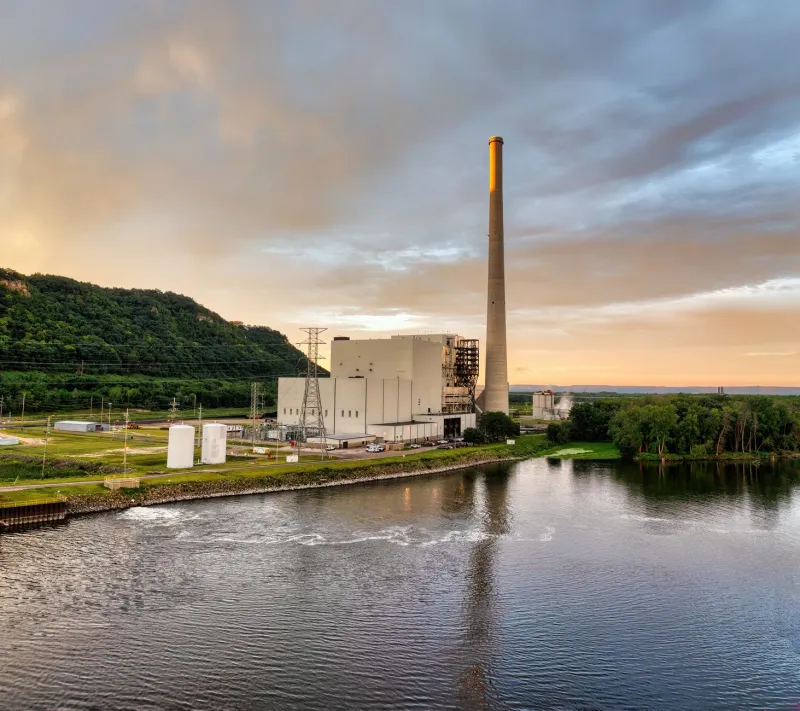
There is a particular kind of institutional inertia that keeps old machines running long after their usefulness has been exhausted. In American energy, that inertia has a price tag — and ratepayers, communities, and the climate are all footing the bill.
Across the continental United States, a substantial portion of the thermal power fleet — facilities that burn coal, natural gas, or oil to generate electricity — is operating well beyond the engineering lifespans for which those plants were originally designed. The average coal plant in America is now over 40 years old. Many units have surpassed 50. These are not abstract statistics. They represent boilers that leak, turbines that underperform, and transmission connections that bleed energy before it ever reaches a home or business.
The consequences are not merely environmental, though those consequences are severe. They are economic — and they are largely invisible to the public that bears them.
What "Efficiency Loss" Actually Means at Scale
The term "thermal efficiency" describes how effectively a power plant converts fuel into usable electricity. A modern combined-cycle natural gas facility can achieve efficiencies approaching 60 percent. An aging coal plant, by contrast, may operate at 30 to 33 percent efficiency — and as components degrade, that figure can slip further. Every percentage point of efficiency lost translates directly into additional fuel burned, additional emissions released, and additional costs incurred.
The Lawrence Berkeley National Laboratory has documented that older coal units frequently operate at heat rates — a measure of fuel consumption per unit of electricity generated — that are 10 to 20 percent worse than nameplate specifications. For a large plant generating several hundred megawatts, that degradation can represent tens of millions of dollars in excess fuel costs annually. Those costs do not disappear. They are embedded in electricity rates and passed along to consumers.
The Energy Information Administration's own data reveals that a meaningful share of the nation's operating coal capacity consists of units that have already exceeded their originally projected retirement dates. Utilities have sought and received regulatory approval to extend operating licenses, often citing reliability concerns or stranded asset valuations — arguments that, on closer inspection, frequently serve shareholder interests more than public ones.
Case Studies in Deterioration
The W.A. Parish Generating Station near Houston, Texas, offers a instructive example. Once among the largest coal-fired facilities in the country, the plant's remaining coal units have faced mounting scrutiny over both their environmental performance and their operating economics. Analyses by energy researchers have found that the plant's aging units frequently operate at efficiencies well below industry benchmarks, generating electricity at costs that exceed the levelized cost of new wind and solar capacity in the same region — sometimes by a considerable margin.
Similar dynamics are playing out at the Navajo Generating Station's successor operations in the Southwest, at aging Appalachian coal facilities in West Virginia and Kentucky, and at underperforming natural gas peaker plants scattered across the Mid-Atlantic and Southeast. In each case, the pattern is consistent: deteriorating equipment, rising maintenance expenditures, declining capacity factors, and ratepayers absorbing costs that are rarely itemized on their monthly bills.
Natural gas plants are not immune to this calculus. Older simple-cycle gas turbines — the workhorses of peak demand management — can operate at efficiencies far below modern equipment, burning significantly more fuel per megawatt-hour produced. As these units age, forced outage rates climb, requiring utilities to maintain redundant capacity and further inflating system costs.
The Ratepayer Transfer: Who Pays and How Much
A 2022 analysis published by the Rocky Mountain Institute estimated that the United States could save ratepayers more than $580 billion over the coming two decades by accelerating the retirement of uneconomic fossil fuel plants and replacing their output with renewable generation and storage. That figure, while striking, reflects a straightforward economic reality: new wind and solar capacity, paired with battery storage, now routinely produces electricity at costs below the operating expenses of aging thermal plants — before capital expenditures, environmental compliance costs, or efficiency penalties are even considered.
The mechanism by which these costs are transferred to consumers is largely opaque. Regulated utilities in most states recover costs through rate cases adjudicated by public utility commissions — proceedings that are technically open to public participation but are, in practice, dominated by utility attorneys and engineering consultants. The inefficiency penalties embedded in aging plant operations are rarely disaggregated from broader rate filings, making it exceptionally difficult for consumer advocates or environmental organizations to isolate and challenge them.
This opacity is not accidental. Utilities with large investments in aging generation assets have strong financial incentives to continue recovering costs from captive ratepayers rather than accepting write-downs. Regulatory frameworks in many states have been slow to adapt to a changed energy landscape, providing insufficient pressure for accelerated retirement timelines.
The Climate Compounding Effect
Beyond the direct economic costs, aging thermal plants impose a compounding climate penalty that extends well beyond their direct emissions. Because older, less efficient plants burn more fuel per unit of output, their carbon intensity is substantially higher than published fleet averages suggest. A coal plant operating at 30 percent efficiency emits significantly more carbon dioxide per megawatt-hour than one operating at 38 percent — a distinction that aggregate emissions reporting often obscures.
Furthermore, aging infrastructure is disproportionately prone to unplanned outages. When a deteriorating plant trips offline unexpectedly, grid operators must compensate by ramping up other dispatchable resources — frequently older peaker plants with similarly poor efficiency profiles. The result is a cascading inefficiency that ripples across the grid, elevating emissions system-wide during precisely the moments when reliability is most critical.
The methane leakage associated with aging natural gas infrastructure compounds the problem further. Older gas-fired facilities are frequently connected to pipeline infrastructure that predates modern leak detection standards, and compressor stations serving these plants exhibit measurably higher fugitive emission rates than newer installations.
The Business Case for Accelerated Retirement
The economic and environmental arguments for retiring aging thermal capacity ahead of schedule have converged in ways that should, in principle, make the policy case straightforward. In practice, the politics remain complicated — particularly in states where coal and gas employment remains economically and culturally significant.
But the data are unambiguous. A systematic program of retiring the least efficient quartile of the American thermal fleet — targeting units with the highest heat rates, oldest equipment vintages, and poorest capacity factors — would simultaneously reduce ratepayer costs, lower grid-wide emissions, and free capital for investment in modern generation and storage infrastructure. Independent analyses from organizations including Resources for the Future, the Natural Resources Defense Council, and academic institutions have reached broadly consistent conclusions: the energy transition is not merely a climate imperative but an economic opportunity being deferred by regulatory inertia and incumbent utility interests.
State public utility commissions, federal energy regulators, and elected officials at every level face a choice. They can continue accommodating the financial interests of utilities invested in aging infrastructure, or they can demand the transparency and accountability that would allow ratepayers to understand — and challenge — the hidden costs they are currently absorbing.
Toward Transparency and Accountability
The Sustainable Energy Coalition believes that genuine corporate accountability in the energy sector must include full disclosure of plant-level efficiency data, honest accounting of the costs embedded in aging infrastructure, and regulatory frameworks that do not subsidize inefficiency at public expense.
America's ratepayers deserve to know what they are paying for — and why. The invisible infrastructure of deteriorating power plants is not a technical footnote. It is a significant and ongoing transfer of wealth from consumers and communities to utilities and their shareholders, conducted largely out of public view.
The clean energy transition offers a path out of this arrangement. But realizing that path requires the kind of rigorous, transparent accounting that incumbent interests have long resisted. The time for that accounting is now.