The Silent Tax: How Electricity Lost in Transit Is Quietly Undermining America's Clean Energy Investment
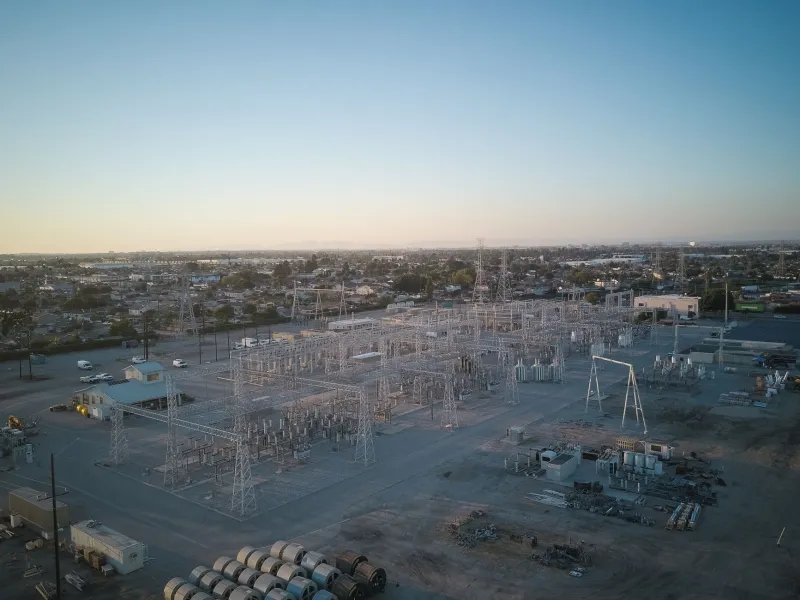
Imagine constructing a solar farm capable of powering 50,000 homes, then watching a portion of that output simply disappear before a single light switch is flipped. This is not a hypothetical scenario. It is the routine reality of electricity delivery in the United States, where between five and seven percent of all power generated is lost to heat, resistance, and inefficiency as it travels through the nation's transmission and distribution network. At current generation scales, that figure represents tens of billions of kilowatt-hours annually — enough to power millions of households — and it carries a price tag that ultimately lands on ratepayers, taxpayers, and the climate itself.
As the federal government and private sector pour unprecedented capital into wind turbines, solar panels, and battery storage, a quieter and arguably more cost-effective opportunity is being systematically overlooked: fixing the grid that already exists.
What Is Being Lost, and Where
Electricity losses occur at multiple stages of the delivery chain. High-voltage transmission lines, which carry power across long distances from generation facilities, account for a portion of the waste. But the more significant culprit is the distribution system — the lower-voltage network of neighborhood transformers, overhead lines, and underground cables that deliver electricity directly to homes and businesses.
Distribution losses alone account for the majority of total system inefficiency, according to data from the U.S. Energy Information Administration. Older transformers, many of which were installed decades ago and are operating well past their designed service lives, are particularly problematic. These devices convert high-voltage power to the lower voltages used by consumers, and when they are inefficient or overloaded, they radiate excess energy as heat — a literal burning of money and clean-energy potential.
The geographic distribution of these losses is uneven. Rural areas with long line runs, aging infrastructure, and lower population density tend to experience higher losses than dense urban corridors. This disparity compounds existing energy inequities, as communities already facing higher per-unit electricity costs bear a disproportionate share of the system's inefficiency burden.
Technologies Available Now — and Largely Ignored
The frustrating reality is that the technical solutions to many of these losses are not speculative. They exist, they are commercially available, and in many cases they have been proven in pilot programs across the country. What is lacking is not innovation — it is deployment at scale.
Advanced conductors represent one of the most straightforward interventions. High-temperature, low-sag conductors — often composed of composite cores rather than traditional steel — can carry significantly more power through existing rights-of-way with reduced resistive losses. Utilities in California and the Pacific Northwest have begun adopting these materials on select transmission corridors, but nationwide uptake remains limited.
Solid-state transformers, which use power electronics rather than conventional electromagnetic induction, offer dramatically improved efficiency and the added benefit of grid-edge intelligence — the ability to monitor, regulate, and respond to changing load conditions in real time. Despite promising demonstrations by national laboratories including Oak Ridge and Argonne, commercial deployment has stalled, in part because existing utility procurement processes favor known technologies over emerging ones.
Dynamic line rating (DLR) systems use real-time environmental data — wind speed, ambient temperature, solar radiation — to calculate the actual safe capacity of transmission lines at any given moment, rather than relying on static conservative estimates. Studies suggest that DLR can increase effective line capacity by 10 to 40 percent without a single new wire being strung. Yet fewer than five percent of U.S. transmission lines currently employ this technology.
Grid topology optimization software, which continuously reconfigures the logical structure of distribution networks to minimize losses, has demonstrated efficiency improvements of two to four percent in controlled trials. At national scale, that margin is enormous. Again, adoption is limited.
The Regulatory Trap
Why, given such a compelling technical and economic case, have these solutions failed to achieve widespread deployment? The answer lies substantially in the structure of utility regulation in the United States.
Most investor-owned utilities operate under a cost-of-service regulatory model in which profits are tied to capital expenditure — the physical assets a utility builds and owns. Under this framework, a utility earns a regulated return on a new substation or transmission line, but captures no equivalent financial reward for reducing losses through software optimization or advanced conductors that cost less than conventional alternatives. Efficiency, paradoxically, can be financially penalized under the traditional regulatory compact.
State public utility commissions have the authority to reform these incentive structures, and a handful — including those in New York, California, and Illinois — have begun experimenting with performance-based regulation that rewards utilities for measurable outcomes including loss reduction. But these efforts remain the exception rather than the rule, and federal coordination through the Federal Energy Regulatory Commission has been inconsistent.
Furthermore, the fragmented nature of the U.S. grid — divided among hundreds of investor-owned utilities, rural cooperatives, and municipal systems — creates coordination challenges that no single state commission can resolve unilaterally. Loss reduction on an interconnected grid is, by nature, a systemic problem requiring systemic solutions.
The Economic Case Regulators Cannot Afford to Ignore
The financial arithmetic of grid efficiency is striking. The American Council for an Energy-Efficient Economy and other research organizations have estimated that a one-percentage-point reduction in national transmission and distribution losses would save consumers billions of dollars annually while reducing the need for new generation capacity. Every megawatt-hour of electricity delivered more efficiently is a megawatt-hour that does not need to be generated, transmitted, or stored.
In the context of the clean energy transition, this logic becomes even more powerful. The United States is currently planning and financing an enormous expansion of renewable generation to meet climate targets. If that new generation must compensate for avoidable system losses, the effective cost of decarbonization rises substantially. Conversely, a more efficient grid stretches every dollar of clean energy investment further — making solar, wind, and storage deployments more cost-effective by ensuring that what they generate actually arrives at the point of use.
The Inflation Reduction Act and the Infrastructure Investment and Jobs Act have directed significant funding toward grid modernization broadly defined, including provisions for transmission development and grid resilience. However, explicit incentives targeting loss reduction as a distinct priority remain underdeveloped within these frameworks. Advocacy organizations and state energy offices should be pressing for more targeted program design in forthcoming implementation guidance.
Accountability Starts With Measurement
One of the most persistent barriers to progress is the absence of standardized, publicly accessible data on utility-level transmission and distribution losses. While the EIA collects aggregate data at the national and regional level, granular reporting by individual utility and service territory is inconsistent and often buried in regulatory filings that require specialized expertise to interpret.
Requiring utilities to report loss data transparently — and to establish measurable reduction targets as a condition of rate approvals — would be a meaningful step toward accountability. Ratepayers who are funding grid infrastructure through their monthly bills deserve to know how efficiently that infrastructure is performing on their behalf.
Several environmental and consumer advocacy groups have begun pushing state commissions in this direction, with modest success. But the pace of change remains mismatched with the urgency of the climate challenge.
Efficiency as a Climate Strategy
The clean energy conversation in America has long centered on what to build: how many gigawatts of solar, how many miles of new transmission, how many gigawatt-hours of storage. These are legitimate and necessary questions. But they are incomplete without an equally rigorous conversation about what we are losing — and what we could preserve through smarter management of the infrastructure already in place.
Grid efficiency is not a consolation prize for climate advocates who cannot secure new generation. It is a foundational climate strategy that reduces emissions, lowers costs, and improves resilience simultaneously. The technologies exist. The economic case is documented. What remains is the political will to demand that utilities, regulators, and federal agencies treat invisible losses as the visible crisis they represent.
The clean energy transition will not be won by generation alone. It will be won — or lost — in the wires.