Ratepayers on the Hook: The Quiet Scandal of America's Unprofitable Coal Plants
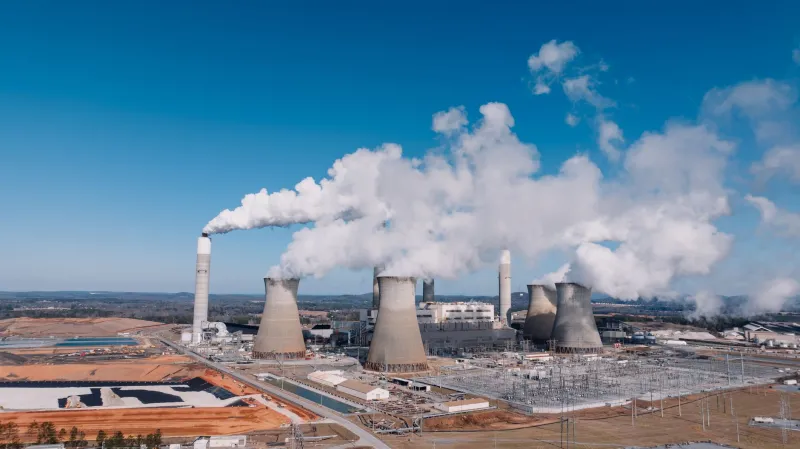
For millions of American households, the monthly electricity bill has become something more troubling than a routine expense. Embedded within those charges — often invisible to the consumer — are payments that effectively subsidize power plants that the market has already rendered obsolete. These are the stranded assets of America's fossil fuel era: aging coal and gas-fired generators that utilities continue to operate not because they are economically sound, but because existing regulatory frameworks allow — and sometimes encourage — companies to recover their losses directly from ratepayers.
The financial arithmetic is not complicated. When a power plant costs more to run than the electricity it produces is worth on the open market, it is, by any reasonable standard, a failed investment. In a competitive marketplace, such assets would be retired. But the utility sector does not always function as a competitive marketplace. In many states, vertically integrated monopoly utilities operate under cost-of-service regulation, a model that permits them to pass along the costs of approved infrastructure — including unprofitable generators — to the customers they serve. The result is a system in which corporate risk is quietly socialized while corporate profits remain private.
When a Power Plant Becomes a Liability
The term "stranded asset" has gained considerable traction in energy policy circles, but its real-world consequences tend to remain abstract until examined at the state level. Consider the situation in Indiana, where utilities have sought to keep several aging coal facilities operational well into the 2030s, despite independent analyses suggesting those plants are already operating at a loss relative to available renewable alternatives. Ratepayers in the state have effectively been asked to underwrite the extended life of infrastructure that cleaner, cheaper generation could replace today.
Or consider the case of Consumers Energy in Michigan, which reached a landmark settlement in 2023 to retire its remaining coal fleet ahead of schedule — a decision driven in part by mounting evidence that continued operation would saddle customers with hundreds of millions of dollars in unnecessary costs. The settlement was widely praised, but it also illustrated how long the problem had festered before regulatory pressure finally compelled action.
In West Virginia, the situation carries an additional layer of political complexity. The state's deep cultural and economic ties to the coal industry have historically insulated utilities from scrutiny, even as the financial case for coal has steadily deteriorated. Ratepayers there continue to carry costs associated with generation assets that market forces would have retired years ago in a less politically constrained environment.
The Regulatory Architecture That Makes It Possible
Understanding why this problem persists requires a brief examination of how utility regulation actually works. In states with traditional cost-of-service regulation, utilities submit rate cases to public utility commissions, which determine what costs are "prudent" and therefore recoverable from customers. The prudency standard was designed to protect ratepayers from corporate mismanagement, but in practice it has often been applied permissively — particularly for investments made in an era when coal was considered a rational long-term bet.
The consequence is a kind of regulatory inertia. Utilities that built coal plants decades ago secured regulatory approval at the time, and those approvals have often been interpreted as entitling companies to full cost recovery even as market conditions have changed dramatically. Challenging that entitlement requires protracted legal and regulatory proceedings that most individual ratepayers are ill-equipped to pursue.
Advocates for reform argue that commissions need to modernize their prudency frameworks to account for changed circumstances — specifically, the dramatic cost declines in wind, solar, and battery storage that have fundamentally altered the economics of electricity generation. When a cheaper, cleaner alternative is available, continuing to operate a more expensive, dirtier plant is not prudent by any honest accounting.
Who Bears the Burden
The distributional consequences of this arrangement are particularly troubling from an equity standpoint. Electricity costs consume a disproportionately large share of income for low- and moderate-income households, a phenomenon researchers call "energy burden." When ratepayers are required to subsidize uneconomic fossil fuel plants, that burden falls hardest on those least able to absorb it.
A 2023 analysis by the Energy and Policy Institute estimated that customers of investor-owned utilities across the country are collectively paying billions of dollars annually to support generation assets that could be replaced with cheaper renewable alternatives. That figure is not evenly distributed. Communities in the industrial Midwest and the rural South — regions with high concentrations of aging coal infrastructure and limited political leverage over utility decision-making — bear a disproportionate share of the cost.
There is a deep irony here that deserves to be stated plainly. The communities most likely to suffer the health consequences of continued coal combustion — elevated rates of respiratory disease, cardiovascular illness, and premature mortality associated with particulate matter and other pollutants — are often the same communities paying the most to keep those plants running.
Pathways to Reform
The policy toolkit for addressing stranded assets is well-developed, even if political will to deploy it has been uneven. Several mechanisms have shown promise in different state contexts.
Securitization — sometimes called "green bonds" or "energy transition bonds" — allows utilities to refinance the remaining book value of retiring coal plants at lower interest rates, reducing the cost burden on ratepayers while enabling accelerated retirement. Colorado and New Mexico have pioneered this approach, with Colorado's 2019 legislation often cited as a national model. The key is ensuring that the savings generated by refinancing are passed on to customers rather than captured as utility profit.
Performance incentives can also reshape utility behavior by rewarding companies for achieving clean energy milestones rather than simply for deploying capital. When utilities earn returns based on outcomes — reduced emissions, improved grid reliability, lower customer bills — the incentive to prop up uneconomic fossil fuel plants diminishes.
Enhanced commission oversight is perhaps the most straightforward reform: requiring utilities to regularly demonstrate that continued operation of existing plants is more cost-effective than available alternatives, and placing the burden of proof on the utility rather than on ratepayers or intervenors.
Finally, robust consumer representation in rate proceedings — through adequately funded state consumer advocates and expanded intervenor compensation programs — can help ensure that the interests of ordinary ratepayers are forcefully articulated in processes that are otherwise dominated by well-resourced utility legal teams.
The Cost of Delay
Every month that an uneconomic coal plant continues to operate represents a compounding failure: higher bills for ratepayers, continued emissions for neighboring communities, and a deepening entrenchment of infrastructure that will eventually need to be retired regardless. The longer utilities and regulators delay the reckoning, the larger the ultimate cost — financial, environmental, and social.
The clean energy transition is not, at this point, a speculative proposition. Wind and solar are the cheapest sources of new electricity generation in American history. Battery storage costs continue to fall. The economic case for retiring stranded fossil fuel assets has never been stronger. What remains is the political and regulatory will to act — and the commitment to ensure that when the transition does occur, the costs are borne equitably rather than loaded onto the households that can least afford them.
America's ratepayers did not make the investment decisions that produced these stranded assets. They should not be the ones left holding the bill.