Draining the Future: How America's Thirstiest Power Plants Are Gambling With the Nation's Water Supply
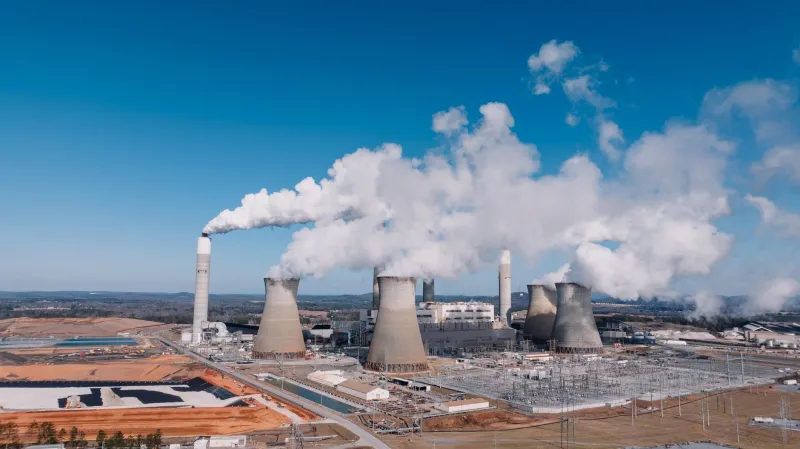
Every megawatt-hour generated by a coal-fired power plant carries a hidden invoice — one that never appears on a utility bill but is paid in full by rivers, reservoirs, and underground aquifers across the United States. While public debate over coal's future has largely centered on carbon emissions and job losses, a quieter reckoning is underway: the staggering volume of freshwater these facilities consume, often in communities where water is already vanishing beneath the surface.
According to the U.S. Geological Survey, thermoelectric power generation — a category that encompasses coal, natural gas, and nuclear plants — accounts for roughly 41 percent of all freshwater withdrawals in the United States, more than any other sector including agriculture. For coal specifically, the numbers are particularly sobering. A single 500-megawatt coal plant can withdraw between 12 and 60 billion gallons of water annually depending on its cooling technology, much of which is lost to evaporation and never returned to the watershed.
This is not an abstract environmental statistic. It is a structural vulnerability embedded in America's legacy energy infrastructure — one that becomes more dangerous with each passing drought season.
The Mechanics of a Thirsty Machine
To understand why coal plants consume so much water, it helps to understand how they actually generate electricity. Unlike solar panels or wind turbines, which convert energy directly from sunlight or kinetic force, coal plants operate as elaborate steam engines. Burning coal heats water into high-pressure steam, which spins a turbine connected to a generator. Once that steam has done its work, it must be cooled and condensed back into liquid form before the cycle can repeat.
This cooling process is where the water crisis lives.
Older plants — and a significant share of America's coal fleet was constructed before 1980 — typically rely on once-through cooling systems, which draw enormous quantities of water from a nearby river or lake, pass it through heat exchangers, and discharge it back at elevated temperatures. Newer facilities more commonly use recirculating wet-cooling towers, which reduce withdrawals but increase consumptive losses through evaporation. Neither approach is remotely comparable to the near-zero water consumption of utility-scale solar or wind generation.
Nuclear plants face an analogous challenge. While they produce no direct carbon emissions, their cooling requirements are, if anything, even more intensive than coal. The Palo Verde Generating Station in Arizona — the nation's largest nuclear facility by generating capacity — is notable for operating in the Sonoran Desert using treated municipal wastewater for cooling. It is an engineering workaround for an underlying paradox: a massive power source situated in one of the driest landscapes on the continent.
Regional Flashpoints: Where Energy and Water Collide
The tension between thermoelectric power and water availability is not uniform across the country. It is concentrated, and it is worsening.
The Colorado River Basin has lost more than 10 trillion gallons of water over the past two decades due to a combination of overuse, population growth, and climate-driven aridification. Several coal and natural gas plants along the basin's tributaries continue to draw from a system that the federal government has already declared in shortage. The Navajo Generating Station in Arizona, once one of the largest coal plants in the Western Hemisphere, was retired in 2019 partly because the economics of continued operation — including water costs — no longer penciled out. Its closure was a signal, though utilities in the region have been slow to heed it.
The Tennessee Valley, historically water-rich, has experienced a series of summer droughts severe enough to trigger emergency restrictions on thermoelectric withdrawals. In 2007 and again in 2016, low water levels on the Tennessee River forced the Tennessee Valley Authority to reduce output at several facilities, raising reliability concerns across a region that still depends heavily on coal and nuclear generation.
The Ogallala Aquifer, stretching beneath eight Great Plains states from South Dakota to Texas, is being depleted at a rate that scientists describe as essentially irreversible on human timescales. While agricultural irrigation is the dominant draw, thermoelectric facilities in the region add to the pressure. In parts of western Kansas and the Texas Panhandle, the aquifer has already dropped to levels that render pumping economically unviable for farmers — a preview of what broader regional water stress could mean for energy infrastructure that relies on the same source.
Diminishing Returns, Expanding Risks
What makes this water consumption particularly difficult to justify is the trajectory of the plants doing the consuming. America's coal fleet is aging. The average coal plant in the United States is now over 40 years old, and capacity factors — a measure of how often a plant operates relative to its maximum potential — have been declining steadily as cheap natural gas and falling renewable costs erode coal's economic position.
In practical terms, this means communities are bearing significant water costs for facilities that operate less and less frequently. They are, in effect, maintaining a water-intensive standby system that generates diminishing energy returns while foreclosing the possibility of investing those water resources in agriculture, municipal supply, or ecosystem restoration.
Utility executives and state regulators have been reluctant to accelerate retirements, citing reliability concerns and the political sensitivity of plant closures in communities that have organized their economies around them. These concerns are legitimate and deserve serious policy responses. But framing the debate solely around jobs and grid stability obscures the full ledger — one that includes the long-term cost of aquifer depletion, increased drought vulnerability, and the downstream effects on agriculture and public health.
The Renewable Alternative: Doing More With Less
The contrast with renewable energy technologies is striking. Utility-scale photovoltaic solar requires essentially no water during operation — only modest amounts for panel cleaning, which can be minimized through dry-cleaning techniques or careful siting. Wind turbines consume no water whatsoever in generation. Even concentrated solar power, which uses thermal processes similar in concept to coal plants, can be configured with dry-cooling systems that reduce water consumption by more than 90 percent compared to conventional thermoelectric facilities.
This is not a marginal difference. It represents a fundamental redesign of the relationship between energy production and water consumption — one that becomes more consequential as climate change simultaneously increases electricity demand for cooling and reduces the freshwater supply available to meet it.
Several states are beginning to incorporate water footprint into their integrated resource planning processes, requiring utilities to account for the long-term water costs of different generation technologies when making investment decisions. Arizona, California, and Colorado have each taken steps in this direction, though advocates argue that federal standards are necessary to create consistent accountability across the grid.
Accountability Starts With Transparency
For communities living downstream — or above the depleting aquifer — from a coal or nuclear plant, the water question is not theoretical. It is a matter of whether the well runs dry, whether the river stays navigable, whether the irrigation district survives another decade.
Holding utilities and regulators accountable requires, first and foremost, transparency. Water withdrawal and consumption data for thermoelectric facilities should be publicly reported, geographically mapped against watershed stress indicators, and incorporated into the cost-benefit analyses that govern plant operation and retirement decisions. Currently, this information is fragmented across state databases and federal reporting systems in ways that make comprehensive public scrutiny difficult.
The Sustainable Energy Coalition has consistently argued that the true cost of energy must account for resource consumption in its entirety — not merely the fuel burned or the carbon emitted, but the water drawn from rivers and aquifers that communities and ecosystems depend upon. By that measure, America's aging thermoelectric fleet is not just a climate liability. It is a water liability, one that compounds with every drought year and every year of deferred transition to genuinely clean, genuinely sustainable alternatives.
The thermal time bomb is ticking. But unlike so many environmental crises, this one comes with a clear solution — if the political will to act on it can be summoned before the wells run dry.