Ghost Emissions: The Leaking Natural Gas Network Quietly Sabotaging America's Climate Goals
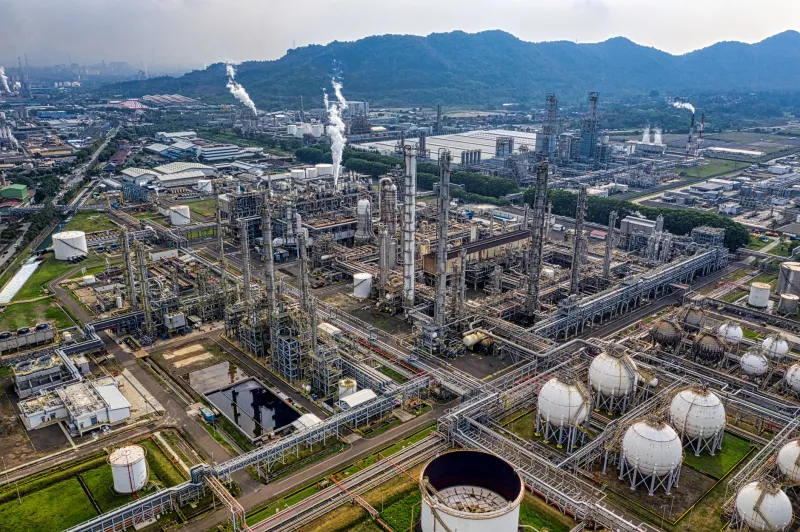
Every year, billions of cubic feet of natural gas vanish before reaching a single American household or power plant. They do not combust. They do not generate electricity or heat a home. They simply escape — seeping through corroded pipe joints, malfunctioning valves, and poorly sealed wellheads — and rise silently into the atmosphere as methane, one of the most potent greenhouse gases on the periodic table.
This is not a fringe environmental concern. It is a systemic infrastructure failure with consequences that rival, and in some timeframes exceed, the climate impact of coal combustion. Yet the regulatory frameworks designed to track and curtail these emissions remain chronically underfunded, technologically outdated, and politically constrained by the very industry they are meant to oversee.
The result is a $50 billion climate blind spot sitting at the center of America's energy economy — and a growing body of scientific evidence demanding that policymakers finally reckon with it.
Methane's Outsized Climate Leverage
To understand why methane leakage deserves urgent attention, one must first appreciate what distinguishes it from carbon dioxide in the atmosphere. Over a 20-year period, methane traps heat approximately 80 times more effectively than CO₂. Over a century, that figure settles closer to 28 times. These are not abstract statistics — they represent the difference between a warming trajectory that remains manageable and one that crosses irreversible tipping points within the lifetime of infrastructure currently being built.
The natural gas industry has long promoted its product as a "bridge fuel" — cleaner than coal, compatible with existing infrastructure, and capable of supporting grid reliability while renewables scale up. That argument, however, depends entirely on the assumption that natural gas is delivered and burned efficiently. When methane leaks at sufficient rates before combustion ever occurs, the climate math collapses.
Researchers at Stanford University and the Environmental Defense Fund have documented through direct atmospheric measurement that the U.S. natural gas system leaks at rates roughly 60 percent higher than official EPA estimates. At those levels, natural gas loses its climate advantage over coal for electricity generation over any policy-relevant time horizon.
The Infrastructure Behind the Problem
America's natural gas network is, by any measure, an aging system. More than 2.5 million miles of pipelines crisscross the country, with significant portions of the distribution network dating back to the mid-twentieth century. Cast iron and bare steel pipes — materials known to corrode and crack — still serve millions of customers in older urban areas, particularly across the Northeast and Midwest.
Beyond pipelines, the system encompasses thousands of compressor stations, processing plants, storage facilities, and interconnection points, each representing a potential emission source. Underground storage fields — caverns and depleted reservoirs where gas is held to manage seasonal demand — have proven particularly problematic. The 2015–2016 Aliso Canyon blowout in Southern California, which released an estimated 100,000 metric tons of methane over four months, offered a dramatic illustration of what can go wrong when aging storage infrastructure fails. Yet that event, catastrophic as it was, represented only the most visible manifestation of a diffuse, continuous problem.
Industry operators are legally required to report emissions to the EPA under the Greenhouse Gas Reporting Program. However, those reports rely overwhelmingly on engineering calculations and emission factors rather than direct measurement. Independent studies using aircraft, satellite imagery, and ground-based sensors have repeatedly found that actual emissions exceed reported figures by substantial margins — in some regions by a factor of two or more.
Why Federal Monitoring Falls Short
The inadequacy of current federal oversight is not primarily a matter of intent. It reflects structural limitations that have accumulated over decades of regulatory incrementalism and industry influence.
The EPA's inventory methodology was developed at a time when high-resolution atmospheric monitoring was neither technically feasible nor economically practical. Updating those methodologies requires not only scientific investment but also political consensus that has proven difficult to achieve when regulated industries have significant lobbying presence before the relevant congressional committees.
The Biden administration's methane rules, finalized in 2023 under the Inflation Reduction Act framework, represented the most ambitious federal effort to date to mandate monitoring, reporting, and emission reduction across the oil and gas sector. Those rules introduced requirements for advanced leak detection technology and imposed fees on excess methane emissions from large facilities. Environmental advocates cautiously welcomed the measures while noting that implementation timelines, enforcement capacity, and the exclusion of certain smaller operators left meaningful gaps in coverage.
The political durability of those rules has since become uncertain. Regulatory rollbacks pursued by subsequent administrations threaten to undermine progress before monitoring infrastructure has been fully established — a familiar pattern in the cyclical history of U.S. environmental regulation.
The Economic Paradox of Unaddressed Leaks
One of the more confounding aspects of the methane leakage problem is that fixing it is, in many cases, economically rational. Methane is a commodity. Gas that escapes into the atmosphere represents direct revenue loss for producers and distributors. Studies by the Rocky Mountain Institute and other research organizations have estimated that methane leakage costs the industry upward of $2 billion annually in lost product — gas that was extracted, transported partway through the supply chain, and then simply lost.
For a significant share of identified leaks, particularly at compressor stations and processing facilities, the cost of repair or equipment replacement is recoverable within a relatively short period through avoided product loss. This suggests that market incentives alone should be driving faster action than currently observed.
The explanation for why they are not lies partly in the structure of utility rate regulation, which in many states allows distribution companies to pass gas costs on to customers regardless of system losses. When the financial burden of leakage is effectively socialized rather than borne by operators, the incentive to invest in leak detection and repair diminishes accordingly. Reforming that regulatory structure — ensuring that operators bear the true cost of their system losses — represents one of the more straightforward policy levers available to state public utility commissions.
A Faster Path Than It Appears
Perhaps the most compelling argument for prioritizing methane leakage reduction is the speed at which it can deliver measurable climate benefit. Because methane is relatively short-lived in the atmosphere compared to carbon dioxide, reducing emissions today produces a detectable cooling effect within years rather than decades. For a climate agenda operating against hard physical deadlines, that temporal advantage is significant.
Deployment of continuous monitoring technology — including satellite-based systems now operated by organizations such as GHGSat and Carbon Mapper — has made it technically possible to identify and locate large emission sources with a precision unimaginable even a decade ago. The data these systems generate is already being used by investors, insurers, and advocacy organizations to hold operators accountable in ways that self-reported inventories never permitted.
The Sustainable Energy Coalition has consistently argued that the clean energy transition requires not only building new renewable capacity but also eliminating the hidden emissions embedded in existing fossil fuel infrastructure. Methane leakage is precisely that kind of embedded problem — invisible to casual observation, underrepresented in official statistics, and addressable through a combination of regulatory reform, targeted investment, and transparent accountability.
America cannot credibly claim leadership on climate action while allowing billions of dollars worth of one of the most potent greenhouse gases on Earth to bleed silently into the sky. Closing that gap is not a distant aspiration. The technology exists. The economic case is largely sound. What remains is the political will to treat this phantom as the urgent, quantifiable crisis it demonstrably is.