Digging for the Future: America's Critical Mineral Crisis and the Clean Energy Race It Could Derail
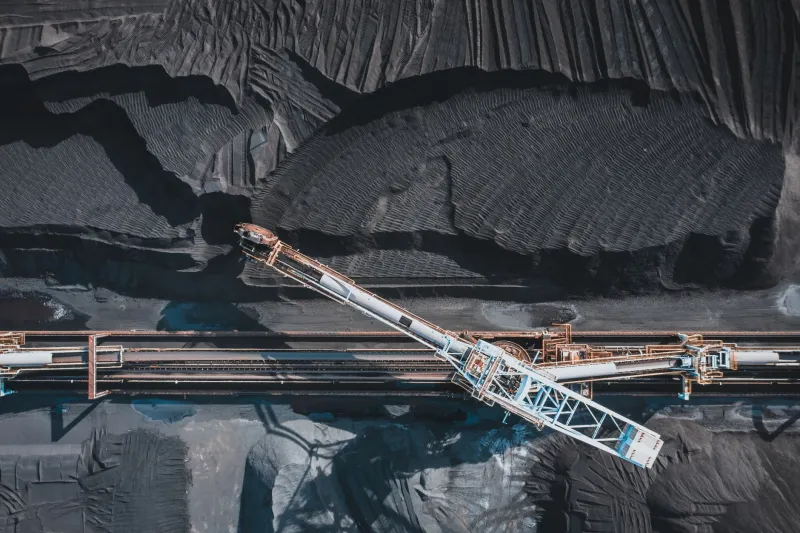
The United States stands at a paradoxical crossroads: possessing the technological ambition to electrify its economy yet lacking reliable domestic access to the minerals that make electrification physically possible. Lithium, cobalt, nickel, and rare earth elements — the elemental building blocks of modern batteries — are in dangerously short supply relative to projected demand. Without a coherent national strategy to secure these resources responsibly, the clean energy transition risks being throttled not by political opposition, but by geology and geopolitics.
The Mineral Math Behind Electrification
Every electric vehicle sold in America today carries within its battery pack a carefully assembled mixture of critical minerals. A single lithium-ion battery in a mid-range EV requires roughly eight kilograms of lithium, fourteen kilograms of cobalt, and significant quantities of nickel and manganese. Scale that across the Biden-era projection of 50 percent EV market share by 2030 — a target that subsequent administrations have debated but that automakers are already engineering toward — and the numbers become staggering.
The BlueGreen Alliance estimates that meeting US climate targets through 2035 will require a six-fold increase in lithium supply and a nearly three-fold increase in cobalt availability. Current domestic production covers a fraction of either figure. The United States produces less than two percent of the world's lithium and has virtually no commercial cobalt mining operation of meaningful scale. That is not a policy failure in isolation — it is a structural vulnerability embedded in the physical geography of American mineral deposits and decades of underinvestment in extraction infrastructure.
Why Domestic Mining Struggles to Catch Up
America is not mineral-poor. Geological surveys have identified substantial lithium reserves in Nevada, North Carolina, and beneath the sediment of California's Salton Sea. Rare earth deposits exist across Wyoming, Idaho, and the Mountain West. The problem is not the presence of these resources — it is the extraordinary difficulty of bringing them to market at speed.
Permitting timelines for new mines in the United States average between seven and ten years, among the longest in the developed world. Environmental review processes under the National Environmental Policy Act, while essential for protecting ecosystems and Indigenous land rights, are routinely weaponized by both industry opponents and regulatory inertia to delay projects indefinitely. The Thacker Pass lithium mine in Nevada, one of the most significant proposed domestic lithium projects, spent years entangled in legal challenges before breaking ground — a timeline that reflects the broader dysfunction of the American permitting architecture.
Beyond permitting, domestic mining faces a cost disadvantage relative to overseas competitors. Labor and environmental standards in the United States are higher — appropriately so — but they translate into production costs that struggle to compete with operations in nations where regulatory oversight is far less rigorous. Without sustained federal price support, loan guarantees, or long-term offtake agreements from automakers, the economics of domestic extraction remain precarious.
The China Dependency No One Wants to Discuss
While the domestic pipeline sputters, China has spent the better part of two decades constructing an almost unassailable position in global critical mineral supply chains. Chinese state-owned enterprises control the majority of cobalt refining in the Democratic Republic of Congo — the source of roughly 70 percent of the world's cobalt supply — and dominate the processing of lithium, rare earths, and graphite globally. Even minerals extracted in allied nations frequently pass through Chinese refining facilities before reaching American battery manufacturers.
This dependency carries profound implications for US energy security. In 2023, China implemented export restrictions on gallium and germanium — minerals used in semiconductors and solar panels — as a geopolitical signaling mechanism. Similar leverage over battery materials would represent an existential threat to the American EV industry. The Inflation Reduction Act's domestic content requirements were designed in part to incentivize supply chain diversification, but shifting entrenched global processing infrastructure takes years, not quarters.
The Department of Energy and the Department of Defense have both designated critical minerals as national security priorities, yet federal investment in domestic processing capacity remains modest relative to the scale of the challenge. Allies including Canada, Australia, and the European Union are moving aggressively to develop their own supply chains. The United States risks arriving late to a race it helped define.
Recycling as a Partial Solution
The most environmentally responsible path to mineral security does not run through new mines alone — it runs through recovery. Battery recycling, if scaled aggressively, could meaningfully reduce dependence on virgin extraction by reclaiming lithium, cobalt, and nickel from end-of-life battery packs. Companies such as Redwood Materials, founded by former Tesla executive JB Straubel, are building domestic recycling infrastructure capable of recovering upward of 95 percent of critical minerals from used batteries.
However, recycling faces a fundamental timing problem. The EV fleet currently on American roads is still relatively young. The volume of end-of-life battery packs available for recycling will not reach commercially significant scale until the late 2020s at the earliest. In the intervening years, the clean energy buildout will require primary mineral inputs that recycled material simply cannot yet provide. Recycling is an indispensable long-term solution, not a near-term rescue.
Alternative Chemistries and the Sodium-Ion Horizon
Industry and academia are actively pursuing battery chemistries that reduce or eliminate dependence on the most constrained minerals. Lithium iron phosphate batteries, which substitute abundant iron for scarce cobalt and nickel, have gained significant market share in stationary grid storage applications and are increasingly competitive in lower-range EV segments. Sodium-ion batteries, which replace lithium with the far more abundant sodium, are approaching commercial viability and have attracted investment from major manufacturers including CATL.
These alternatives are genuinely promising, but they are not yet performance-equivalent to high-nickel lithium-ion chemistries for long-range passenger vehicles. The transition to alternative chemistries will be gradual, market-segment-specific, and dependent on continued research investment. Policymakers should not treat chemistry diversification as a substitute for supply chain strategy — it is a complement to it.
A Coherent Strategy Is Not Optional
The mineral bottleneck constraining America's clean energy ambitions is not an abstraction. It is a concrete, measurable impediment with a closing window for remediation. A credible national response must simultaneously streamline domestic permitting without sacrificing environmental and community protections, invest in processing infrastructure through direct federal financing, deepen mineral partnerships with allied democracies, and accelerate battery recycling capacity through extended producer responsibility frameworks.
Corporate accountability matters here as well. Automakers and battery manufacturers that have publicly committed to electrification timelines have an obligation to invest in the supply chains that make those commitments credible — including financing domestic recycling facilities, supporting responsible extraction standards globally, and engaging transparently with affected communities. Pledges to electrify fleets ring hollow when supply chain planning remains reactive rather than strategic.
The clean energy transition is, at its core, a materials challenge as much as a technology challenge. Acknowledging that reality — and building policy around it — is the first step toward ensuring that America's renewable future is not indefinitely deferred by the scarcity of what lies beneath its feet.