Sunlight Shared: How Rural Communities Are Rewriting the Rules of Energy Ownership
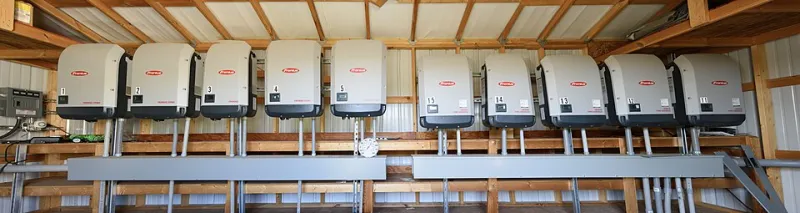
Photo: USDAgov, Public domain, via Wikimedia Commons
A Different Kind of Power Plant
Drive through rural Nebraska or the hill country of eastern Tennessee, and you may notice something new on the landscape: clusters of solar panels sitting on leased farmland, feeding electricity into local grids and sending bill credits back to subscribers who may live miles away. These are not the massive utility-scale solar farms that dominate headlines. They are community solar installations — modest, locally governed, and deliberately designed to serve people who have historically been left out of the clean energy transition.
Community solar, sometimes called shared solar, allows households and businesses to subscribe to a portion of a solar array located off-site. Subscribers receive credits on their electricity bills proportional to their share of the array's output. The model eliminates the need for rooftop installation, making solar accessible to renters, residents of shaded properties, and anyone who lacks the upfront capital for a private system. In rural America, where energy costs frequently exceed national averages and grid reliability remains a persistent concern, the model is gaining remarkable traction.
The Economic Case for Shared Infrastructure
For farmers, community solar offers a dual opportunity. Landowners can lease portions of their property — often marginal or unproductive acreage — to solar developers, generating steady income that supplements increasingly volatile crop revenues. At the same time, participating as subscribers allows farm operations to lock in predictable energy costs, shielding them from the price swings that have long made rural electricity bills unpredictable.
In Minnesota, which passed the nation's first community solar statute in 2013, the program has grown to encompass hundreds of projects serving tens of thousands of subscribers. A significant share of those subscribers are low- and moderate-income households, thanks to carve-out provisions that require developers to allocate a percentage of capacity to income-qualified residents. The financial savings are not trivial: participants in Minnesota's program have reported average bill reductions of 10 to 15 percent annually, a meaningful figure for households spending a disproportionate share of income on energy.
In rural Georgia, a coalition of Black-owned farms in the Southwestern part of the state partnered with a regional cooperative to develop a 500-kilowatt shared array in 2021. The project, supported in part by USDA Rural Energy for America Program (REAP) grants, provides power to eleven participating farm operations and a local food processing facility. Beyond the energy savings, organizers describe the project as an act of economic self-determination — a reclaiming of infrastructure that communities of color were systematically excluded from building during the twentieth century.
Breaking Down the Barriers
Despite its promise, community solar faces structural obstacles that have slowed adoption in many states. Utility opposition remains one of the most significant. Investor-owned utilities, which dominate electricity markets across much of the South and Midwest, have lobbied aggressively against community solar legislation, arguing that shared arrays undermine grid investment and shift costs to non-participating ratepayers. These arguments, energy advocates contend, are largely pretextual — designed to protect monopoly revenue streams rather than serve the public interest.
Regulatory fragmentation compounds the challenge. Community solar programs are authorized in roughly half of all states, and the rules governing them vary enormously. Credit rates, subscription caps, eligible customer classes, and interconnection timelines differ from jurisdiction to jurisdiction, creating compliance burdens that deter smaller developers from entering rural markets. Federal policy has historically provided limited guidance, leaving advocates to fight program-by-program battles before state public utility commissions.
Financing presents a further barrier. Community solar projects in rural areas often involve smaller arrays, more dispersed subscriber bases, and longer interconnection queues than urban counterparts — all factors that increase per-unit development costs and complicate the tax equity structures that dominate renewable energy finance. Mission-driven lenders and community development financial institutions (CDFIs) have stepped in to fill some of this gap, but the capital stack for rural community solar remains fragile.
Policy Momentum and the Federal Role
The Inflation Reduction Act of 2022 introduced provisions that meaningfully strengthen the community solar landscape. The law's new low-income bonus tax credits — providing an additional 10 to 20 percent credit adder for projects serving income-qualified subscribers — directly address the economic math that has historically made rural and low-income community solar difficult to finance. Early evidence suggests developers are responding: applications to the IRS's Low-Income Communities Bonus Credit Program were substantially oversubscribed in its first allocation round, signaling strong market interest.
The law also expanded the Investment Tax Credit's direct pay provisions, allowing tax-exempt entities such as rural electric cooperatives, municipal utilities, and tribal governments to receive credits as direct payments rather than relying on third-party tax equity investors. This change is potentially transformative for cooperatives, which serve a substantial share of rural America's electricity customers and have historically lacked the financial structures to monetize tax credits independently.
Advocates are pushing for additional reforms at both the federal and state levels. Proposals include standardized interconnection rules that prioritize smaller distributed projects, mandatory low-income set-asides in all state community solar programs, and enhanced USDA funding for agricultural community solar. Several states, including Illinois and Colorado, have recently enacted legislation that incorporates these elements, offering models that other legislatures could follow.
What Success Looks Like
In Custer County, Colorado, a sparsely populated mountain community with a median household income well below the state average, a locally organized energy cooperative launched a 250-kilowatt community solar project in 2022. The project was developed entirely through community investment — residents purchased shares through a cooperative structure rather than subscribing through a private developer — and the governing board includes elected representatives from both the farming and low-income subscriber communities.
The Custer County project is still modest in scale. But it illustrates something important about the community solar model at its best: it is not simply a mechanism for delivering cheaper electricity. It is a vehicle for building civic infrastructure, redistributing the economic benefits of the energy transition, and giving rural residents a genuine stake in the systems that power their lives.
The energy grid of the future will not be built solely by utilities or driven solely by market forces. It will be shaped, in significant part, by communities that refused to wait for someone else to solve their energy problems. In rural America, that process has already begun.
How to Get Involved
If you are a rural resident, farmer, or local official interested in community solar, the National Renewable Energy Laboratory's Community Solar Toolkit and the Solar Energy Industries Association's community solar resources offer practical guidance on program structures and development pathways. Organizations such as GRID Alternatives and the Clean Energy States Alliance provide technical assistance specifically for low-income and rural community solar projects. Engaging your state public utility commission and state legislature on community solar legislation is among the most impactful actions advocates can take to accelerate adoption in states where programs remain absent or inadequate.