Windfall for Whom? How Outside Investors Are Harvesting Rural America's Renewable Wealth
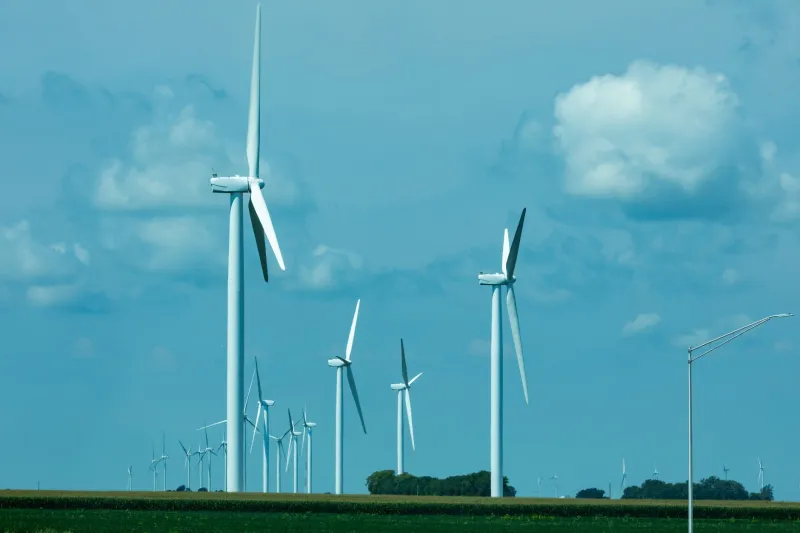
Drive through the high plains of western Kansas or the wind-scoured ridgelines of central Iowa and you will see them everywhere: towers rising 300 feet above the wheat and corn, blades sweeping arcs wide enough to span a football field, generating electricity that travels hundreds of miles to power cities whose residents will never see the turbines that serve them. The energy transition has arrived in rural America. The question that an increasing number of communities are asking — with growing urgency and frustration — is who it has arrived for.
The economic arithmetic of large-scale renewable energy development in rural America has followed a remarkably consistent pattern. A utility company or private developer negotiates individual lease agreements with landowners, securing access to land for turbine or panel installation. The developer constructs the project, claims federal tax credits, and sells electricity under long-term power purchase agreements with utilities or corporate buyers. The landowner receives a royalty — typically between $4,000 and $8,000 per turbine annually for wind, somewhat less for solar — while the developer captures the substantial majority of revenue generated over the project's 25- to 30-year lifespan.
The Lease Agreement Trap
Landowner advocates and rural economists have documented a series of structural problems with the lease agreements that govern most utility-scale renewable projects. These contracts are typically drafted by developers' legal teams, presented to individual landowners without legal counsel, and contain provisions that would alarm any commercial real estate attorney. Royalty rates are frequently fixed without inflation adjustment clauses, meaning payments made in the final years of a 30-year agreement carry purchasing power a fraction of their nominal value. Decommissioning liability provisions are often vague or absent, leaving landowners potentially responsible for removal costs when projects end. Non-disclosure clauses prevent neighbors from comparing terms, systematically undermining landowners' negotiating leverage.
In communities where a single developer controls multiple leases across a township, the information asymmetry is particularly acute. Developers possess detailed wind resource assessments, financial models, and revenue projections; individual farmers negotiating lease terms typically possess none of these. The result is agreements that legal scholars of agricultural land use have compared, in structural terms, to the extractive mineral leases that historically stripped wealth from Appalachian coal country.
"These are not partnerships," said one rural community organizer in Nebraska who has spent several years helping landowners renegotiate lease terms. "These are arrangements designed to transfer maximum value to the developer while giving landowners just enough to keep them from organizing collectively."
Local Governments Left Holding Empty Promises
County governments in rural areas have often welcomed renewable energy projects with tax abatements and streamlined permitting, anticipating that new development would expand the local tax base and fund schools, roads, and emergency services. The actual fiscal outcomes have frequently disappointed these expectations.
Many large renewable projects qualify for payment-in-lieu-of-taxes arrangements that reduce their effective tax burden well below what a comparable commercial property would pay. State-level renewable energy tax incentive programs, designed to attract investment, often function by transferring tax value from local governments to state coffers or directly to project developers. In multiple documented cases, counties that hosted utility-scale wind or solar installations found their net tax revenue increase modest or negligible after accounting for road damage from construction traffic, increased demand for emergency services, and the administrative costs of managing development agreements.
Job creation projections have proven similarly disappointing. Large wind and solar installations are capital-intensive but not labor-intensive once construction is complete. A utility-scale wind farm generating enough electricity to power 50,000 homes may require only two or three permanent employees for ongoing operations and maintenance — and those positions frequently go to technicians recruited from outside the region, rather than local residents.
Communities Fighting Back: The Cooperative Alternative
Against this backdrop, a growing number of rural communities have begun pursuing an alternative development model: cooperative and community ownership structures that retain economic value locally rather than exporting it to distant shareholders.
The model has deep roots in rural America — the rural electric cooperatives established under the New Deal still serve approximately 42 million Americans across 48 states — and its application to renewable energy development is producing measurable results. In Minnesota, a state policy requiring investor-owned utilities to procure a portion of their power from community-owned renewable projects has spawned dozens of locally controlled wind and solar installations whose revenues flow to member-investors in the surrounding area. In Iowa, farmer-owned wind cooperatives have demonstrated that the financial returns achievable through collective ownership dwarf what individual landowners receive through conventional lease arrangements.
The financial case for community ownership is straightforward. A landowner who leases ground for a wind turbine might receive $200,000 over 25 years. A landowner who holds an equity stake in the same turbine — capturing not just land rent but a share of electricity revenue, tax credit value, and residual asset value — might receive several times that amount. The difference represents wealth that, under the conventional model, travels to institutional investors in New York, Houston, or London.
Policy Solutions That Could Rebalance the Equation
Advocates for rural energy equity have identified several policy interventions that could systematically shift the balance of renewable energy benefits toward host communities. At the federal level, reforming the tax credit transfer mechanisms established under the Inflation Reduction Act to prioritize or provide enhanced credits for community-owned projects would create powerful financial incentives for local ownership structures. Mandatory minimum royalty standards for wind and solar leases on agricultural land — similar to the royalty floors that exist for mineral extraction on federal lands — would establish a baseline of landowner protection that individual negotiation has failed to provide.
At the state level, community benefit agreement requirements — binding commitments from developers to local hiring targets, workforce training investments, and community fund contributions as a condition of project approval — have gained traction in several jurisdictions. Some states have enacted or are considering right-of-first-refusal provisions that give local cooperatives or municipalities the opportunity to acquire ownership stakes in renewable projects before they are sold to outside investors.
The clean energy transition is not inherently extractive. Wind and sunlight, unlike coal and oil, are inexhaustible and locally available. The communities that host renewable energy infrastructure could, under a different set of rules, become genuine stakeholders in the energy economy rather than passive hosts. Achieving that outcome requires deliberate policy choices — and the political will to make them over the objections of the utilities and investment funds that benefit handsomely from the status quo.
Rural America powered the industrial economy for generations, often at great cost to its land, water, and people. The clean energy era presents an opportunity to write a different story. Whether that opportunity is seized or squandered will depend on choices being made right now, in state legislatures, federal agencies, and the offices of renewable energy developers across the country.