Thirsty Power: How the American West's Water Crisis Is Forcing a Reckoning With Renewable Energy's Hidden Footprint
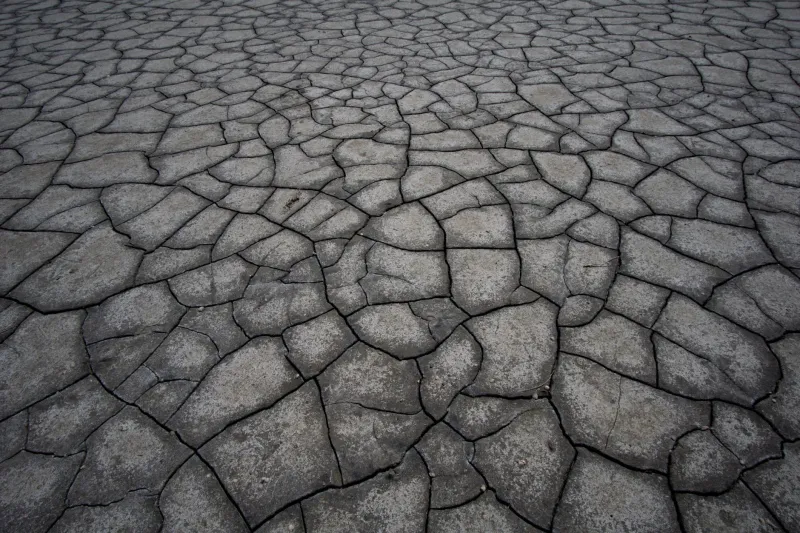
The Colorado River no longer reaches the sea. Lake Mead, the largest reservoir in the United States, has in recent years dropped to levels not recorded since the dam that created it was first filled in the 1930s. Across Arizona, Nevada, New Mexico, and California, water managers are engaged in an increasingly desperate arithmetic — rationing allocations, renegotiating compacts, and confronting the uncomfortable reality that the West's water future will look nothing like its past.
Into this crisis steps an irony that the clean energy sector has been slow to acknowledge: some of the renewable energy infrastructure being deployed at scale across these same drought-stricken landscapes carries a water footprint that demands far greater scrutiny than it has received.
Not All Renewables Are Created Equal — Hydrologically Speaking
The popular image of solar and wind power as inherently water-free is accurate for some technologies and deeply misleading for others. Photovoltaic solar panels, which convert sunlight directly into electricity, use negligible amounts of water during operation — typically only what is needed for occasional panel washing. The same is broadly true of wind turbines, whose water consumption during generation is essentially zero.
Concentrating solar power (CSP) plants, however, operate on an entirely different principle. These facilities use mirrors or lenses to focus sunlight onto a heat transfer fluid, which drives a conventional steam turbine. That turbine requires cooling — and in most utility-scale CSP installations currently operating in the United States, that cooling is accomplished through evaporative water systems. A wet-cooled CSP plant can consume between 800 and 900 gallons of water per megawatt-hour of electricity generated, a rate comparable to a coal-fired power station.
The Ivanpah Solar Electric Generating System in California's Mojave Desert — for years the world's largest CSP installation — consumes approximately 100 million gallons of water annually from a region where water is among the most contested resources on earth. The Solana Generating Station in Arizona, another large CSP facility, draws from groundwater supplies in the Gila River Basin, a watershed already under severe stress.
These are not marginal footnotes. They represent a genuine conflict between two legitimate environmental priorities: decarbonizing the electricity grid and preserving the freshwater systems upon which both ecosystems and communities depend.
The Siting Problem Nobody Wanted to Name
Beyond the operational water demands of specific technologies, the siting of renewable energy facilities raises questions about cumulative hydrological impact that the permitting process has historically been ill-equipped to address.
Large solar installations — even photovoltaic ones — alter the hydrology of the landscapes they occupy. By covering soil with panels and gravel, utility-scale solar farms reduce rainfall infiltration, change evapotranspiration rates, and can affect local groundwater recharge. In the Sonoran Desert and the Mojave, where what little precipitation falls is critical to recharging shallow aquifer systems, these effects are not trivial.
Wind energy development in water-stressed regions presents a different but related challenge. The concrete required for turbine foundations demands water during curing. Access road construction disrupts natural drainage patterns. And the transmission infrastructure connecting remote wind resources to population centers often crosses watersheds and riparian corridors with their own fragile hydrology.
Environmental review processes under the National Environmental Policy Act (NEPA) are theoretically designed to surface these concerns. In practice, water impact analyses in renewable energy permitting have frequently been cursory — a reflection of institutional pressure to approve projects quickly in the service of decarbonization targets, even when the hydrological consequences are incompletely understood.
The Corporate Responsibility Dimension
For the corporations and investment funds driving large-scale renewable energy development, the water question represents an emerging accountability gap. Environmental, social, and governance (ESG) frameworks have proliferated across the finance sector, yet water consumption by clean energy assets remains poorly disclosed and rarely incorporated into project-level sustainability assessments.
When a major utility or independent power producer announces a new solar installation in the Arizona desert, its press materials will invariably highlight the carbon emissions avoided and the megawatt-hours generated. They will almost never disclose the projected water consumption, the source aquifer, or the cumulative impact on regional water availability. This selective transparency is, at minimum, incomplete — and it undermines the credibility of the broader clean energy narrative.
Shareholder advocacy organizations and water rights groups have begun pressing developers on these questions, with mixed results. A handful of leading firms have voluntarily committed to dry-cooled or air-cooled systems for new CSP projects — a meaningful step that reduces water consumption by roughly 90 percent compared to wet cooling, at the cost of a modest reduction in generating efficiency. But such commitments remain the exception rather than the norm, and no federal standard currently requires them.
Technologies Pointing Toward a Water-Responsible Future
The encouraging news is that engineering solutions to the renewable energy water problem exist and are advancing. The challenge is accelerating their deployment.
For CSP, the transition from wet to dry cooling is the most impactful near-term intervention. Hybrid cooling systems that use minimal water only during peak generation periods offer a middle path that balances efficiency with resource conservation. Researchers at the National Renewable Energy Laboratory (NREL) are also exploring alternative heat transfer fluids and thermodynamic cycles that reduce cooling requirements at the system level.
For photovoltaic solar, waterless panel cleaning technologies — including robotic dry-cleaning systems and electrostatic dust removal — are reducing the water demands of operations and maintenance in arid environments. Several large installations in California and Nevada have already adopted these approaches, demonstrating their commercial viability.
Perhaps most promisingly, the principle of co-location is gaining traction as a tool for reducing both land and water impacts simultaneously. Agrivoltaic systems — which integrate solar panels with agricultural production — can reduce soil moisture evaporation beneath panels, potentially benefiting water-stressed farmers while generating clean electricity. In the right context, this approach transforms the water-energy tension into a water-energy synergy.
A Policy Framework for Water-Responsible Energy Development
Technological progress alone will not resolve the structural conflicts between renewable energy expansion and water security. Policy reform is equally essential.
At the federal level, the Bureau of Land Management and the Department of Energy should incorporate binding water impact thresholds into the permitting standards for utility-scale renewable projects on public lands. Projects that cannot demonstrate water neutrality or net-positive hydrological impact in critically water-stressed regions should face heightened scrutiny and, where appropriate, denial.
State water agencies in the Colorado River Basin states should be granted explicit standing to intervene in federal energy permitting processes where proposed projects threaten adjudicated water rights or groundwater sustainability. The current siloing of energy and water governance creates regulatory blind spots that no single agency is positioned to address.
Finally, the financial sector's ESG disclosure frameworks must evolve to treat water consumption by clean energy assets as a material risk factor — one that is quantified, audited, and reported with the same rigor applied to carbon emissions. Investors who are genuinely committed to sustainability cannot afford to overlook the hydrological consequences of the assets they are funding.
The Honest Accounting We Owe Ourselves
None of this analysis is an argument against renewable energy development. The imperative to decarbonize the American electricity grid remains urgent and non-negotiable. But urgency is not a license for incomplete accounting.
The West's water crisis is real, deepening, and already imposing severe costs on communities, farmers, and ecosystems across a vast region. A clean energy transition that exacerbates that crisis — even inadvertently — is not a transition worthy of the name. The Sustainable Energy Coalition's vision of a cleaner, smarter America demands that we build renewable infrastructure that respects every dimension of environmental integrity, including the one that flows beneath our feet and sustains our lives.