Small Reactors, Big Claims: Stress-Testing Nuclear Energy's Next Chapter
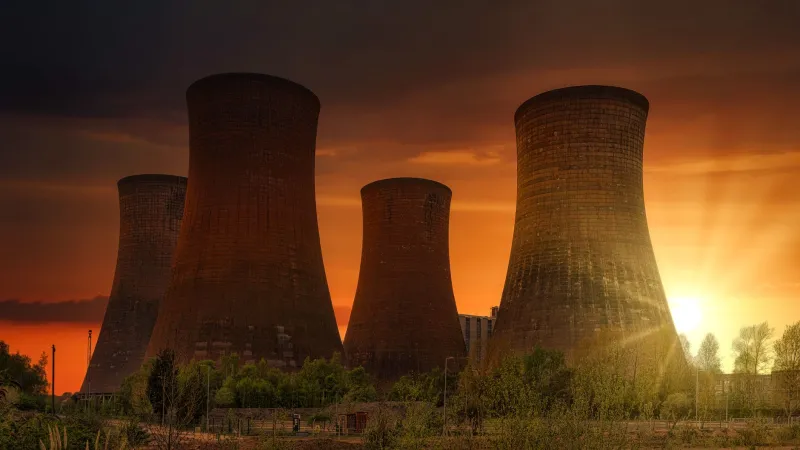
The American nuclear industry has a complicated relationship with its own promises. For decades, it offered the vision of electricity "too cheap to meter" — a phrase that became one of the most embarrassing predictions in the history of energy technology. The construction cost overruns that shuttered projects across the country in the 1970s and 1980s, followed by the multi-billion-dollar disasters of Vogtle Units 3 and 4 in Georgia — the most recent attempt to build conventional large-scale nuclear in the United States — have left a legacy of institutional skepticism that any nuclear revival must honestly confront.
And yet the revival is underway. A cohort of startups and established defense contractors are advancing a diverse portfolio of next-generation reactor concepts, backed by substantial venture capital, Department of Energy funding, and the enthusiastic attention of policymakers searching for firm, dispatchable, carbon-free power sources to complement the inherently variable output of wind and solar. The question that responsible energy analysis demands we ask is simple, if not easily answered: this time, is it different?
The Technology Landscape
The term "advanced nuclear" encompasses a genuinely diverse range of concepts, and conflating them obscures important distinctions in their maturity, economics, and risk profiles.
Small modular reactors, or SMRs, represent the most commercially developed segment of the advanced nuclear field. These designs — typically defined as reactors with generating capacity below 300 megawatts electric — are intended to achieve cost competitiveness through factory fabrication, standardized design, and simplified safety systems that reduce the need for active cooling infrastructure. NuScale Power, whose light-water SMR design received design approval from the Nuclear Regulatory Commission in 2022, was until recently the leading commercial SMR candidate in the United States. The cancellation of NuScale's Carbon Free Power Project in late 2023, after projected costs escalated from roughly $58 per megawatt-hour to over $89 per megawatt-hour — rendering the project uncompetitive with wind, solar, and battery storage — delivered a significant blow to the narrative of affordable SMR power.
Molten salt reactors represent a more radical departure from conventional nuclear technology. These designs use liquid fluoride or chloride salt as both coolant and, in some configurations, fuel carrier, enabling operation at higher temperatures and lower pressures than conventional light-water reactors. Proponents argue that molten salt systems offer inherent safety advantages — including passive shutdown characteristics that eliminate certain classes of severe accident — as well as the potential to consume existing nuclear waste as fuel. Terrestrial Energy, Kairos Power, and Flibe Energy are among the American firms pursuing variants of this approach. None has yet operated a commercial-scale demonstration facility.
Fusion energy occupies a category unto itself. Commonwealth Fusion Systems, TAE Technologies, Helion Energy, and several other well-capitalized startups have made headlines with claims of commercial fusion power within the decade. The achievement of ignition at the National Ignition Facility in December 2022 provided genuine scientific validation of inertial confinement fusion concepts. However, the distance between laboratory ignition and a commercially operating fusion power plant involves engineering challenges — sustained plasma containment, tritium breeding, materials capable of surviving neutron bombardment for decades — that fusion scientists themselves acknowledge remain formidable.
The Cost Problem: Structural or Solvable?
The fundamental question for advanced nuclear is whether the cost problems that afflicted previous generations of reactors were contingent — the product of regulatory uncertainty, one-off construction, and institutional inexperience — or structural, rooted in the basic physics and engineering requirements of nuclear fission.
The optimistic case rests on the factory fabrication argument. Conventional large nuclear plants are effectively custom-constructed on-site, with all the schedule risk, labor cost variability, and quality control challenges that entails. SMRs, in theory, would be manufactured in controlled factory environments, shipped to sites as complete modules, and assembled with the efficiency of industrial production. This is the logic that drove down the cost of solar panels by more than 90 percent over two decades: standardization, scale, and learning-curve effects.
The skeptical case notes that this argument has been made before — and that nuclear's cost trajectory has historically moved in the opposite direction from other energy technologies. Each successive generation of conventional reactors cost more per unit of capacity, not less, as safety requirements accumulated and construction timelines extended. Critics point out that SMRs, by virtue of their smaller size, sacrifice the economies of scale that large reactors achieve, and that the "factory fabrication" model has yet to be demonstrated at commercial scale for any nuclear technology.
The NuScale cancellation is particularly instructive because it occurred after NRC design certification — the most significant regulatory milestone an SMR developer can achieve — and still could not produce competitive economics. Proponents argue that first-of-a-kind costs will fall as the industry matures; skeptics respond that this argument has been used to justify nuclear investment for 60 years without delivering the promised cost reductions.
The Regulatory Dimension
The Nuclear Regulatory Commission has undertaken meaningful reforms in recent years aimed at reducing the time and cost of licensing advanced reactor designs. The Nuclear Energy Innovation and Modernization Act of 2019 directed the NRC to develop a risk-informed, technology-inclusive regulatory framework — the Part 53 rulemaking — intended to accommodate reactor concepts that differ fundamentally from the light-water designs around which existing regulations were written.
Progress has been slower than the industry and its congressional supporters would prefer. The NRC faces resource constraints, a complex technical environment, and the inherent challenge of regulating technologies that do not yet exist in operational form. Several advanced nuclear developers have expressed frustration with licensing timelines and have explored siting options in Canada and the United Kingdom, where regulatory frameworks are perceived as more accommodating.
The regulatory challenge is not merely bureaucratic friction. Nuclear safety regulation exists because the consequences of regulatory failure are severe, long-lasting, and geographically extensive. The appropriate response to licensing delays is not to weaken safety standards but to adequately resource the agency responsible for enforcing them — a straightforward budgetary commitment that Congress has been reluctant to make.
Partner to Renewables, or Expensive Distraction?
For organizations committed to the clean energy transition, the nuclear question ultimately resolves to a question of opportunity cost. Every dollar of public investment directed toward advanced nuclear development is a dollar not available for accelerating the deployment of wind, solar, and battery storage technologies whose cost curves are well established and still declining. Every year spent waiting for SMR commercialization is a year in which the atmosphere continues to accumulate greenhouse gases.
The honest answer is that advanced nuclear and renewable energy are not necessarily in competition — but they are competing for finite policy attention, regulatory bandwidth, and public capital. A portfolio approach that maintains advanced nuclear research and development while aggressively scaling proven renewable technologies is defensible. A strategy that treats nuclear as the primary solution to the firm-power challenge — and uses that framing to slow renewable deployment — is not.
The advanced nuclear industry has made more credible technical progress than at any point in the past three decades. Whether that progress translates into commercially deployed, cost-competitive power plants within a timeframe relevant to the climate crisis remains genuinely uncertain. What is not uncertain is that the American public, having already absorbed the costs of Vogtle's overruns and NuScale's cancellation, deserves a rigorous and unsentimental accounting of what it is being asked to fund — and why.