Clean Energy's Inequality Problem: When the Green Transition Leaves Low-Income Households Behind
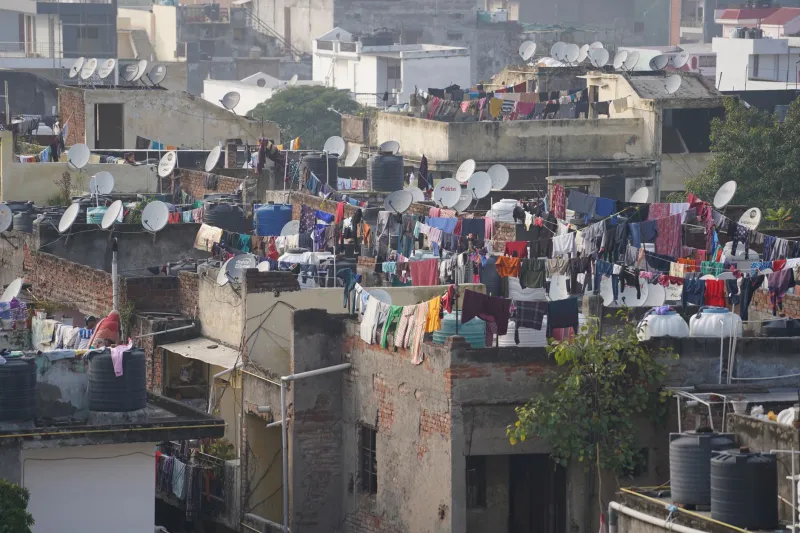
The image that clean energy advocates most often project is one of democratizing abundance—sunlight falling equally on all rooftops, wind blowing across communities of every income level, a future in which energy costs trend toward zero as the marginal cost of renewable generation approaches nothing.
The lived reality for millions of low-income American households tells a considerably different story.
Across the country, from the post-industrial cities of the Midwest to the rural counties of the Deep South to the apartment-dense neighborhoods of coastal metros, working-class and low-income families are experiencing the clean energy transition primarily as a sustained increase in their monthly electricity bills. The renewable revolution, for them, is arriving not as liberation but as a line item—and a growing one.
The Architecture of Energy Inequality
To understand why the transition is unfolding this way, it is necessary to understand how electricity rates are actually structured—and how that structure interacts with the economics of distributed solar adoption.
Electric utilities recover their costs through rates charged to customers. Those costs fall into two broad categories: variable costs, which scale with the amount of electricity generated and delivered, and fixed costs, which do not—the capital expense of transmission lines, substations, transformers, metering infrastructure, and the administrative overhead required to operate a regulated utility.
Historically, utilities have recovered both types of costs primarily through volumetric charges—rates expressed in cents per kilowatt-hour. This approach is administratively simple but creates a structural problem when customers begin generating their own electricity through rooftop solar. A household with solar panels dramatically reduces its volumetric consumption from the grid, and therefore its contribution to fixed cost recovery, while continuing to rely on the grid for backup power, nighttime electricity, and the ability to export surplus generation.
The customers who cannot reduce their grid consumption—because they rent rather than own their homes, because they live in apartments without suitable rooftop access, because they lack the upfront capital or creditworthiness to finance a solar installation, or because they simply cannot afford to participate in the clean energy economy—must then shoulder a larger share of those fixed costs through higher rates.
This dynamic, which energy economists have documented with increasing precision over the past decade, is not hypothetical. It is already measurable in states with high solar penetration. A 2022 study published in the journal Nature Energy found that net metering policies in California had transferred approximately $65 per year in costs from solar-adopting households to non-solar households, with the burden falling disproportionately on lower-income ratepayers. As solar penetration continues to rise, that transfer will grow.
Who Goes Solar—and Who Cannot
The demographic profile of rooftop solar adopters in the United States is not difficult to characterize. Lawrence Berkeley National Laboratory's annual Tracking the Sun report consistently finds that solar adopters skew heavily toward higher-income households, predominantly white, primarily homeowners in suburban settings with suitable roof orientations and creditworthy financial profiles.
The federal Investment Tax Credit, the primary policy mechanism through which the government has subsidized rooftop solar adoption, is structured as a nonrefundable income tax credit—meaning it provides its greatest benefit to households with substantial federal tax liability. A household earning $30,000 annually, paying minimal federal income tax, captures little or none of the credit's value. A household earning $200,000 annually captures the full thirty percent benefit.
State-level incentive programs have historically replicated this regressive structure. Net metering, which allows solar customers to receive retail-rate credit for surplus generation exported to the grid, effectively provides a subsidy whose value scales with the size of the solar installation—and therefore with the homeowner's available capital.
The result is a policy ecosystem in which the households with the greatest capacity to invest in clean energy receive the most generous public support for doing so, while the households with the greatest need for energy cost relief receive comparatively little.
Grid Modernization's Hidden Tax
The inequity extends beyond rooftop solar into the broader cost structure of grid modernization itself. Upgrading transmission infrastructure, deploying advanced metering systems, integrating distributed energy resources, and hardening the grid against extreme weather events all require substantial capital investment. That investment must be recovered from ratepayers.
For a household spending three percent of its income on electricity—roughly the national median—a fifteen percent rate increase is a manageable inconvenience. For a household spending eight or ten percent of its income on electricity, the same increase represents genuine hardship. The American Council for an Energy-Efficient Economy estimates that approximately twenty-five million American households are energy burdened, spending more than six percent of income on home energy costs. Approximately twelve million are severely energy burdened, spending more than ten percent.
These households are concentrated in specific geographies: the rural South, where older housing stock is energy-inefficient and utility rates have risen faster than the national average; tribal lands, where grid infrastructure is often inadequate and electricity costs are among the highest in the nation; and low-income urban neighborhoods, where renters in older multifamily buildings have little ability to weatherize their units or install efficiency measures.
For these communities, the abstract promise of a clean energy future offers little comfort when the concrete reality is a utility shutoff notice.
Solutions That Are Gaining Ground
The picture, while sobering, is not without promising corrective responses.
Community solar programs—which allow households to subscribe to a share of a solar installation sited elsewhere in their utility territory and receive bill credits proportional to their share's output—have emerged as the most scalable mechanism for extending solar benefits to renters and low-income households who cannot install panels on their own rooftops. Illinois's Community Solar program, which reserves a meaningful portion of capacity for income-qualified subscribers at discounted rates, has been widely cited as a model worth replicating. Colorado, New York, and Minnesota have developed similar low-income carve-out provisions.
The Inflation Reduction Act included provisions specifically designed to address energy equity, including enhanced tax credits for clean energy projects sited in low-income communities or serving low-income households, and funding for state energy offices to develop equitable clean energy programs. The Low-Income Home Energy Assistance Program, while chronically underfunded relative to demonstrated need, provides a foundation on which more robust federal energy affordability policy could be built.
Some advocates are pushing for more fundamental reforms to utility rate structures—specifically, the introduction of income-graduated fixed charges that would shift a portion of infrastructure cost recovery from volumetric rates to charges scaled to household income. California's Public Utilities Commission approved a version of this approach in 2024, establishing a flat monthly charge that varies by income tier while reducing per-kilowatt-hour rates. The policy is controversial, opposed both by utilities concerned about revenue predictability and by some solar advocates who argue it reduces the economic incentive for solar adoption. But it represents a genuine attempt to decouple grid cost recovery from energy consumption in ways that protect vulnerable households.
The Equity Imperative
Clean energy advocates have sometimes been reluctant to foreground the equity dimensions of the transition, fearing that emphasizing costs and distributional conflicts will undermine political support for renewable deployment. That reluctance is understandable but ultimately counterproductive.
A clean energy transition that concentrates benefits among the affluent while distributing costs across the economically vulnerable is not only morally indefensible—it is politically fragile. The backlash against energy cost increases, when it comes, will not distinguish between costs attributable to renewable integration and costs attributable to other factors. It will simply register as opposition to the policies that voters associate with rising bills.
Building durable political coalitions for the clean energy transition requires that the transition actually deliver tangible benefits to working-class and low-income communities—not as an afterthought or a programmatic add-on, but as a central design principle. That means reforming rate structures, expanding community solar access, funding weatherization at scale, and ensuring that the public investment in grid modernization is structured to protect rather than burden the households with the least capacity to absorb additional costs.
The clean energy future should belong to everyone. Making that aspiration real requires confronting, honestly and directly, the ways in which the transition as currently structured falls short of that promise.