Power Without a Path: How Broken Transmission Policy Is Leaving America's Clean Energy Stranded
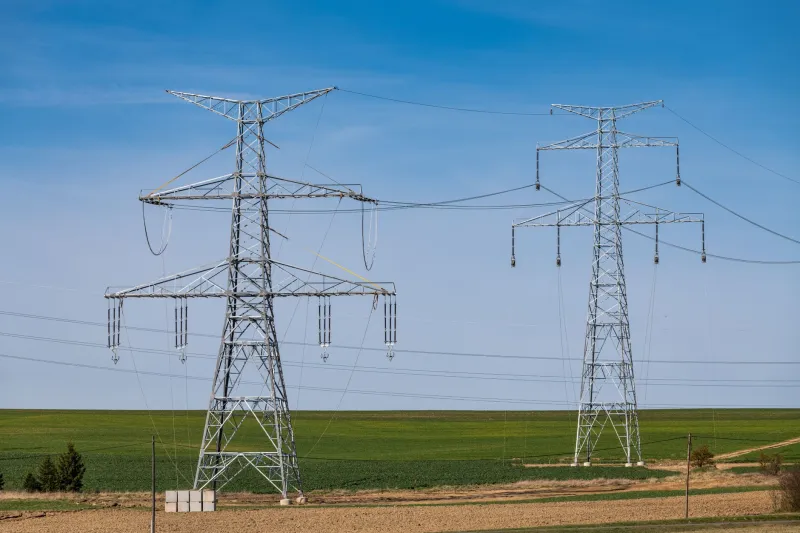
The image of a wind turbine standing idle on a breezy Great Plains afternoon is more than an irony — it is a policy failure rendered in steel and fiberglass. Across the United States, hundreds of gigawatts of renewable energy capacity sit locked in interconnection queues, unable to deliver power to the consumers who need it most. The culprit is not a shortage of sunlight or wind. It is a transmission system built for a fossil fuel era that has neither the architecture nor the governance structures to carry America's clean energy future.
Understanding why this bottleneck exists — and what it will take to break it — requires tracing a problem that runs from federal regulatory chambers all the way down to the property lines of individual landowners in rural counties.
The Queue That Never Moves
As of recent estimates, more than 2,600 gigawatts of generation capacity — the overwhelming majority of it solar, wind, and battery storage — sits waiting in interconnection queues managed by grid operators across the country. To put that figure in perspective, the entire installed generating capacity of the United States currently stands at roughly 1,200 gigawatts. In other words, the clean energy waiting to be connected to the grid is more than twice what the country currently uses.
The wait times are staggering. A project entering a queue today may not receive an interconnection study result for five years or more. Many developers abandon their applications entirely before receiving approval, creating a churn of speculative filings that clogs the process further. According to research from Lawrence Berkeley National Laboratory, only about one in four projects that enter a queue ultimately reach commercial operation.
This is not a problem of clean energy being uneconomical or technically unfeasible. It is a problem of infrastructure governance — a system designed to evaluate projects one at a time, rather than planning regionally for the grid that a renewable-powered America will require.
Who Decides — and Who Pays
At the heart of the transmission crisis lies a fundamental question of cost allocation: who is responsible for paying to upgrade the grid when a new power plant wants to connect?
Under the prevailing "first-mover" model used by many grid operators, the developer of a new generation project bears the upfront cost of any transmission upgrades required to accommodate their facility. This sounds reasonable in isolation, but it creates a profound collective-action problem. If a new solar farm in West Texas triggers the need for a regional transmission upgrade that would benefit dozens of subsequent projects, the first developer shoulders costs that rightly belong to the broader system — and to the ratepayers who will eventually benefit from cheaper, cleaner power.
The result is predictable: developers either inflate their project costs to account for this risk, or they walk away from otherwise viable projects. Communities that could have been economic anchors for clean energy development are bypassed in favor of locations closer to existing load centers, even when those locations offer inferior renewable resources.
Utility companies, meanwhile, have limited financial incentive to invest proactively in transmission expansion. Under traditional rate-of-return regulation, utilities earn a guaranteed profit on capital investments — but only after those investments are approved by state or federal regulators. The approval process is slow, contentious, and uncertain, particularly for interstate lines that must navigate multiple jurisdictions. The safer financial bet, for a regulated utility, is to manage the existing asset base rather than champion the kind of bold buildout the energy transition demands.
The Interstate Maze
If cost allocation is the economic barrier, jurisdictional fragmentation is the political one. A high-voltage transmission line connecting wind resources in Wyoming to population centers in California or Nevada must cross state lines — and in doing so, must satisfy the regulatory requirements of each state it traverses, secure easements from potentially thousands of private landowners, and obtain approval from the Federal Energy Regulatory Commission (FERC).
FERC has taken meaningful steps in recent years to address the transmission crisis. Order 1920, finalized in 2024, represents the most significant overhaul of transmission planning rules in over a decade. The rule requires regional grid operators to conduct long-range transmission planning that accounts for projected changes in the generation mix — a departure from the reactive, project-by-project approach that has dominated for years. It also establishes clearer frameworks for allocating the costs of transmission upgrades among the utilities and customers who benefit from them.
These are genuine advances. But federal rules alone cannot resolve a problem rooted in state-level politics and private property rights. Some of the most resource-rich corridors for renewable energy transmission run through states whose legislatures have been actively hostile to clean energy development. Others pass through rural communities that have legitimate concerns about land use, environmental impact, and the distribution of economic benefits from large infrastructure projects.
Regional Transmission Organizations as a Path Forward
One of the most promising structural solutions to the transmission bottleneck is the expansion and strengthening of Regional Transmission Organizations (RTOs) and Independent System Operators (ISOs). These entities — which already manage grid operations across much of the eastern United States and California — provide a framework for coordinated, regional planning that transcends individual utility territories and state boundaries.
Where RTOs operate, transmission planning tends to be more forward-looking, cost allocation more equitable, and interconnection queues better managed. The Southeast and parts of the Mountain West, however, remain dominated by vertically integrated utilities that have resisted RTO participation. Extending RTO-style governance to these regions would not only accelerate clean energy deployment — it would also lower electricity costs for consumers by enabling more efficient dispatch of generation resources across larger geographic areas.
Proponents of expanded RTO coverage argue that the federal government has both the authority and the responsibility to push reluctant states and utilities toward regional coordination. Critics, particularly in states with strong traditions of utility regulation, counter that federal mandates would undermine local control. Resolving this tension is ultimately a political task, not a technical one — and it will require sustained advocacy from clean energy stakeholders, consumer groups, and the communities that stand to benefit most from a modernized grid.
The Stakes for American Communities
The transmission bottleneck is not an abstract regulatory problem. It has direct consequences for the communities that host renewable energy projects and for the millions of households that will pay electricity bills for decades to come.
When a wind farm in rural Kansas or a solar installation in the Mojave Desert cannot deliver its power to market, the economic promise of the clean energy transition goes unrealized. Local governments lose tax revenue. Construction and operations jobs fail to materialize. And the broader project of decarbonizing the American electricity sector falls further behind the pace required to meet climate commitments.
Conversely, a well-planned, adequately funded transmission buildout would unlock enormous value — not just in reduced carbon emissions, but in lower electricity prices, improved grid reliability, and the creation of durable economic opportunity in regions that have long been energy producers without sharing fully in energy prosperity.
The turbines are spinning. The panels are collecting light. What is missing is the political will to build the wires that would carry that energy where it is needed. That will not emerge on its own. It will require advocacy, accountability, and a clear-eyed recognition that the infrastructure of the clean energy future must be treated as a public good — planned, funded, and governed accordingly.